
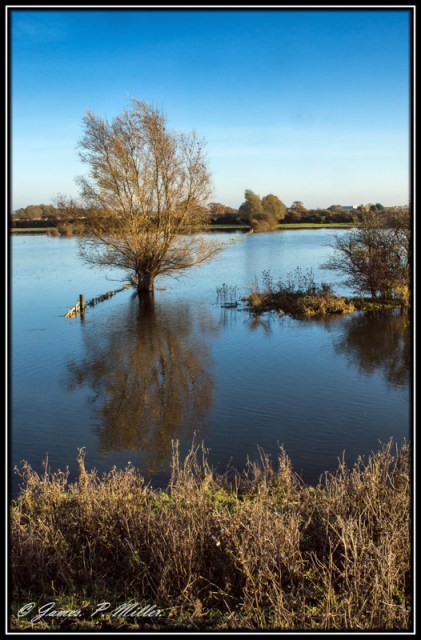
Walking in the Cambridgeshire fens along the Ouse Washes between The Bedford Rivers is always a comfort to a weary soul and evocative of The Nine Taylors by Dorothy L Sayers especially when the washes are in full flood.


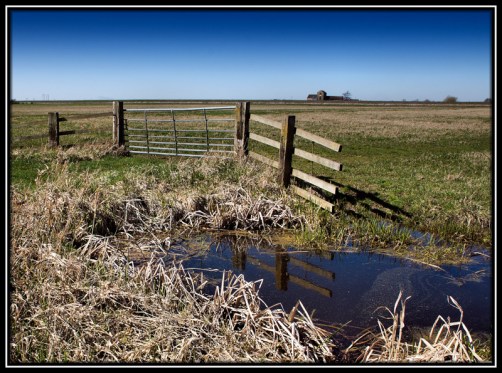
With camera in hand it is always tempting to capture the wide open space, the large sky, reflections in the flood plain or Fortrey’s pumping station standing on Engine Bank against a cloudy sky.


There are endless possibilities in the detail of the landscape like the bee seeking substance from the thistle on the bank of the hundred foot drain. The problem arises when trying to find a caption appropriate for the composition.
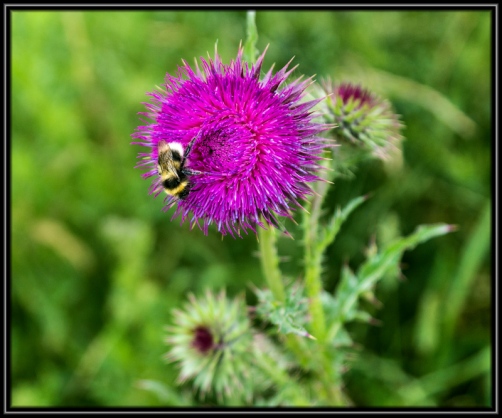
Now as mentioned this is the land where Lord Peter Wimsey applies his analytic mind to discovering the location of the Wilbraham emeralds and the murderer of the butler Deacon but try as I may I can find no correlation to the thistle and the bee but if we take a leaf out of Lord Peter’s book and apply some meticulous reasoning, like the landscape itself there are endless possibilities.
Shakespeare’s Midsommer Nights Dream could be applied where Bottom states
Mounsieur Cobweb, good mounsieur, get you your
weapons in your hand, and kill me a red-hipped
humble-bee on the top of a thistle; and, good
mounsieur, bring me the honey-bag. Do not fret
yourself too much in the action, mounsieur; and,
good mounsieur, have a care the honey-bag break not;
I would be loath to have you overflown with a
honey-bag, signior. Where’s Mounsieur Mustardseed?
or we could turn to the poet Ted Hughes for The Thistle
Against the rubber tongues of cows and the hoeing hands of men
Thistles spike the summer air
And crackle open under a blue-black pressure.
Not to mention Sylvia Plath for the bee or perhaps Emily Dickinson
and her poem entitled There is a Flower that Bees Prefer
There is a flower that Bees prefer —
And Butterflies — desire —
To gain the Purple Democrat
The Humming Bird — aspire —
And Whatsoever Insect pass —
A Honey bear away
Proportioned to his several dearth
And her — capacity —
Her face be rounder than the Moon
And ruddier than the Gown
Or Orchis in the Pasture —
Or Rhododendron — worn —
We could even use a quote or two from A A Milne’s Winnie-the-Pooh due to his love of honey and his friend Eeyore’s passion for thistles.
If we were looking for a more modern example then A Single Thistle by Raymond A. Foss could be appropriate but as he reminds us, if we need reminding that the thistle is the flower of Scotland
therefore it has to be the motto and the crest of The Clan Fergusson as this uses both the bee and the thistle and also appeals to my Scottish roots.
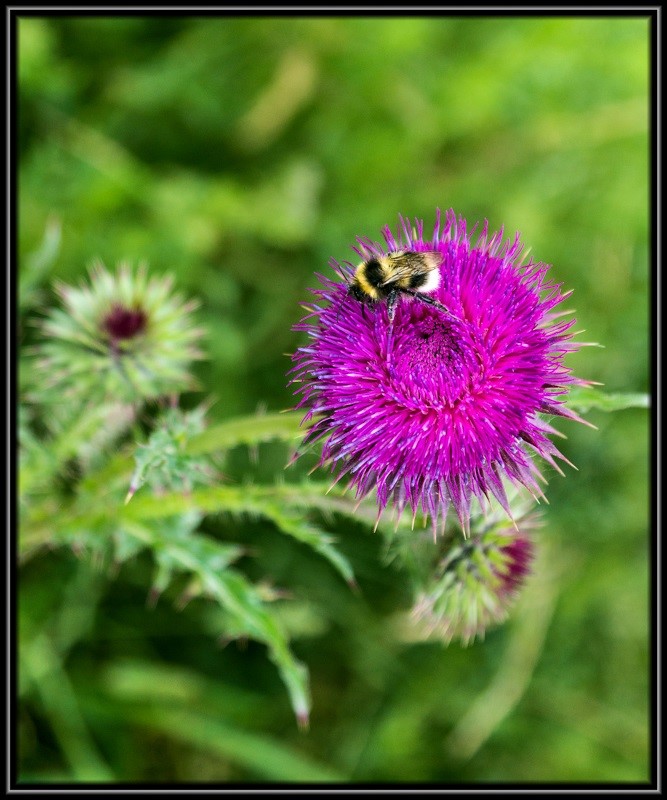
Title: dulcius ex asperis
Caption: A Bee on a Thistle
The crest of The Clan Fergusson
Their Motto: dulcius ex asperis (sweeter after difficulties).
Found living on The Ouse Washes, The Fens, Mepal, Cambridgeshire


 Photographic Ramblings