Category Archives: Literary Connections

The 7th Earl, His 2nd Wife and St Peter’s Church Deene.

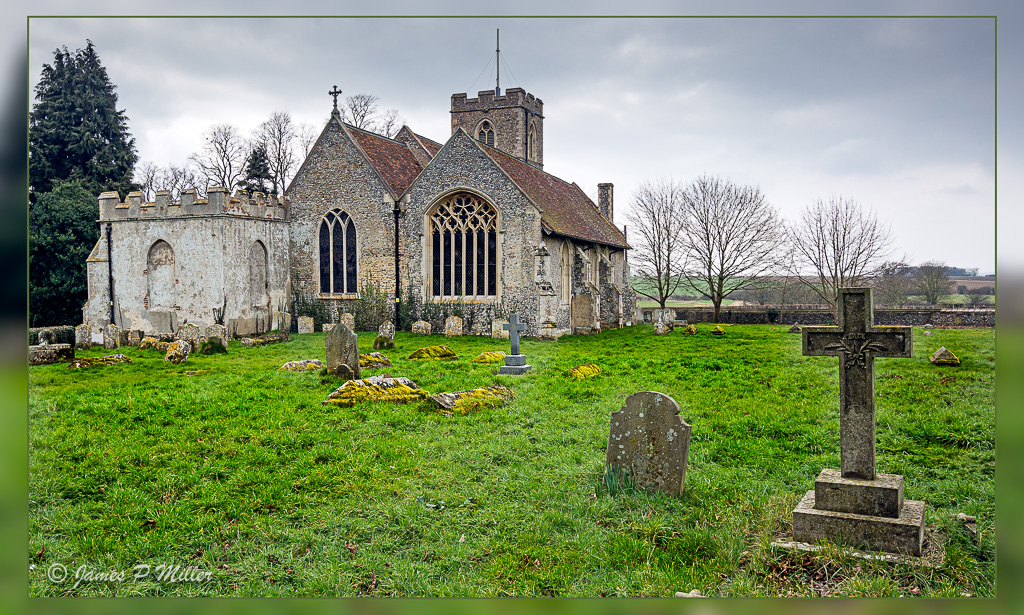
St Peter’s Church, Deene, Northamptonshire.

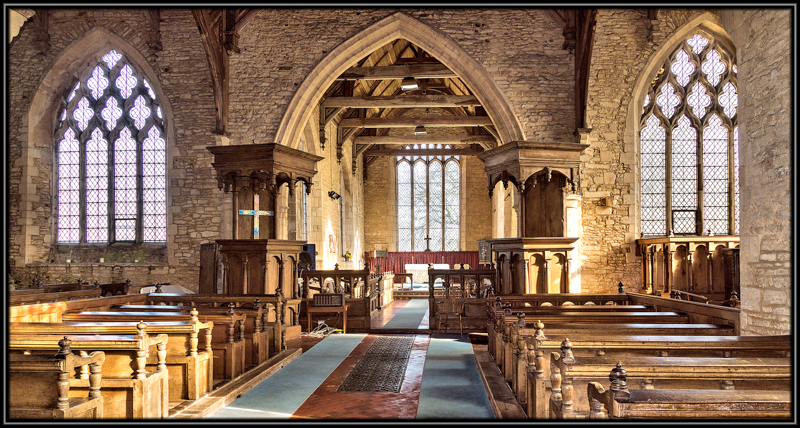
This has been years in the making. We have visited St Peters Church, Deene, Northamptonshire many times but have never passed through its doors, but recently all that changed and the doors yielded with a certain amount of dexterity applied to the large door handle. 

The Church is under the care of The Churches Conservation Trust

It is the last resting place of James Thomas Brudenell Seventh Earl of Cardigan who lead the charge of the Light Brigade famously portrayed in Alfred Lord Tennyson’s poem.
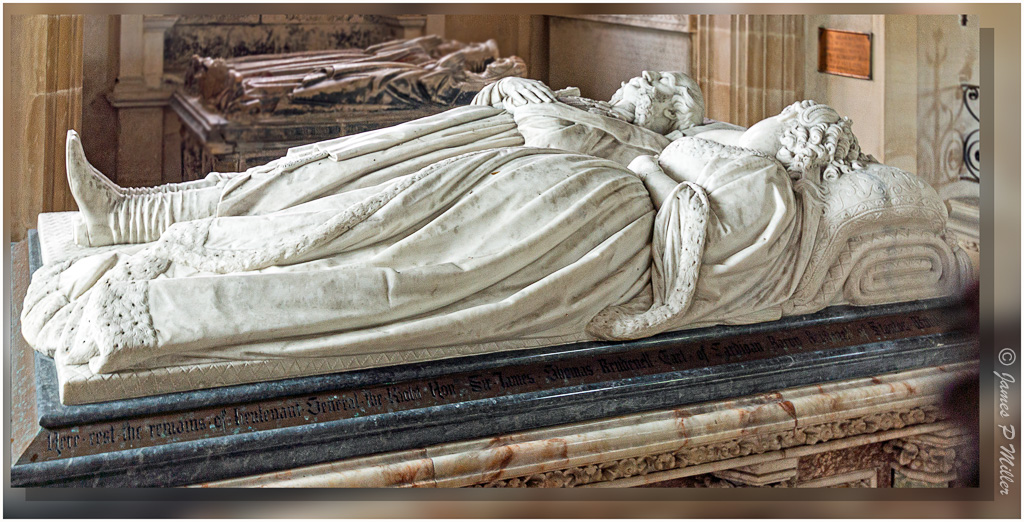
Monument Seventh Earl of Cardigan and Lady Cardigan, Adeline Louise Maria

You will find the Earl and his second wife’s monument in the South Chapel along with other members of the family dating back to 1531. When we visited the entrance to the Brudenell Chapel was locked so acquiring a picture of the memorial was a challenge. The Earl who’s character and temper is well documented can be seen clearly with his splendid whiskers but his wife has her face turned towards her husband so her features are not visible, but her personality and eccentricity was no less fascinating than the Seventh Earl.

Adeline Louise Maria De Horsey was Twenty Seven years younger than James Thomas Brudenell when they met and he was still married but they both fell in love and she became his mistress until Lady Cardigan died and they could marry.

James Thomas Brudenell Seventh Earl of Cardigan fell from his horse and died In 1868.   Lady Cardigan, Adeline Louise Maria lived on at Deene Park which she loved, enjoyed riding, hunting and arranging steeplechases through the church graveyard, becoming more eccentric with time dying forty seven years after her husband Lord Cardigan in 1915 at the age of ninety.

St Peter’s Church Deene Northamptonshire

The approach to St Peter’s Church from Bulwick Road appropriately with two fine horses grazing in the foreground.

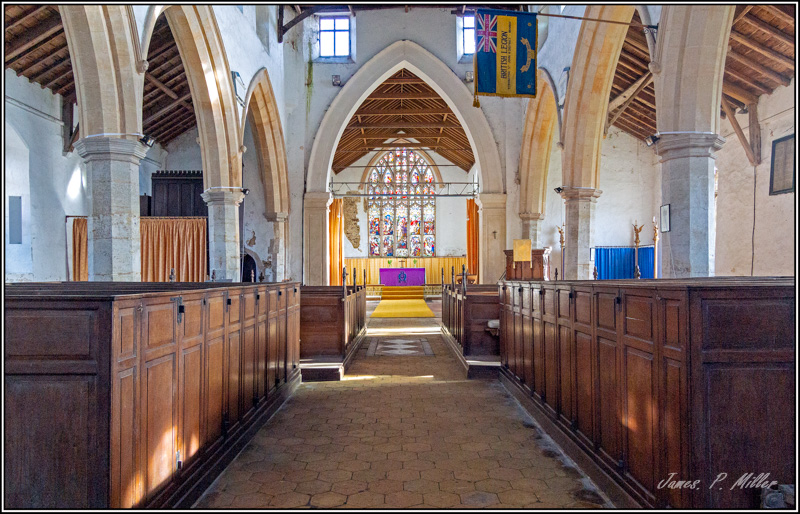
The East Window, St Peter’s Church, Deene, Northamptonshire.

When can their glory fade?

O the wild charge they made!

All the world wondered.

Honour the charge they made!

Honour the Light Brigade,

Noble six hundred!

The Charge of the Light Brigade

BY ALFRED, LORD TENNYSON
The Miser of Acton Jarndyce v Jarndyce and A Poets Grave

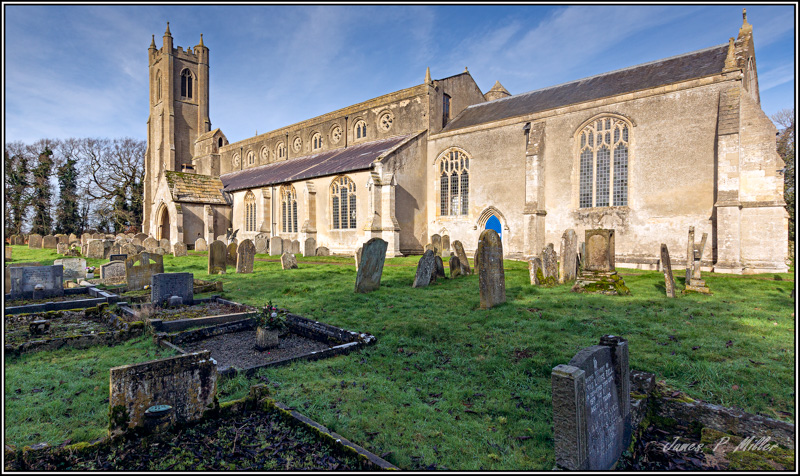
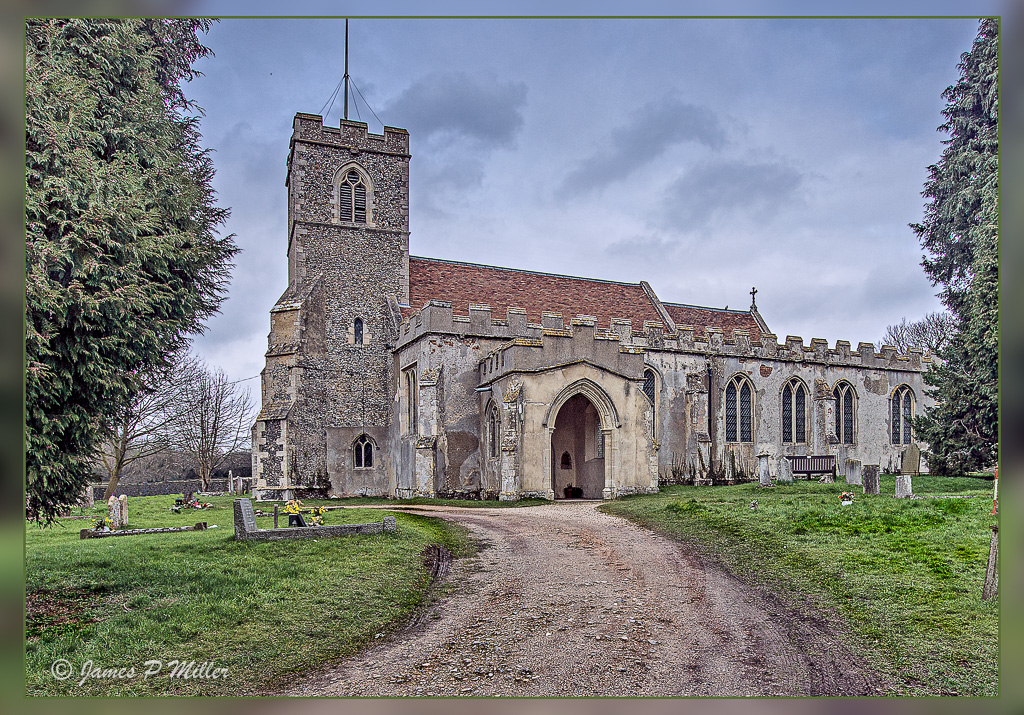
All Saints Church, Action, Suffolk

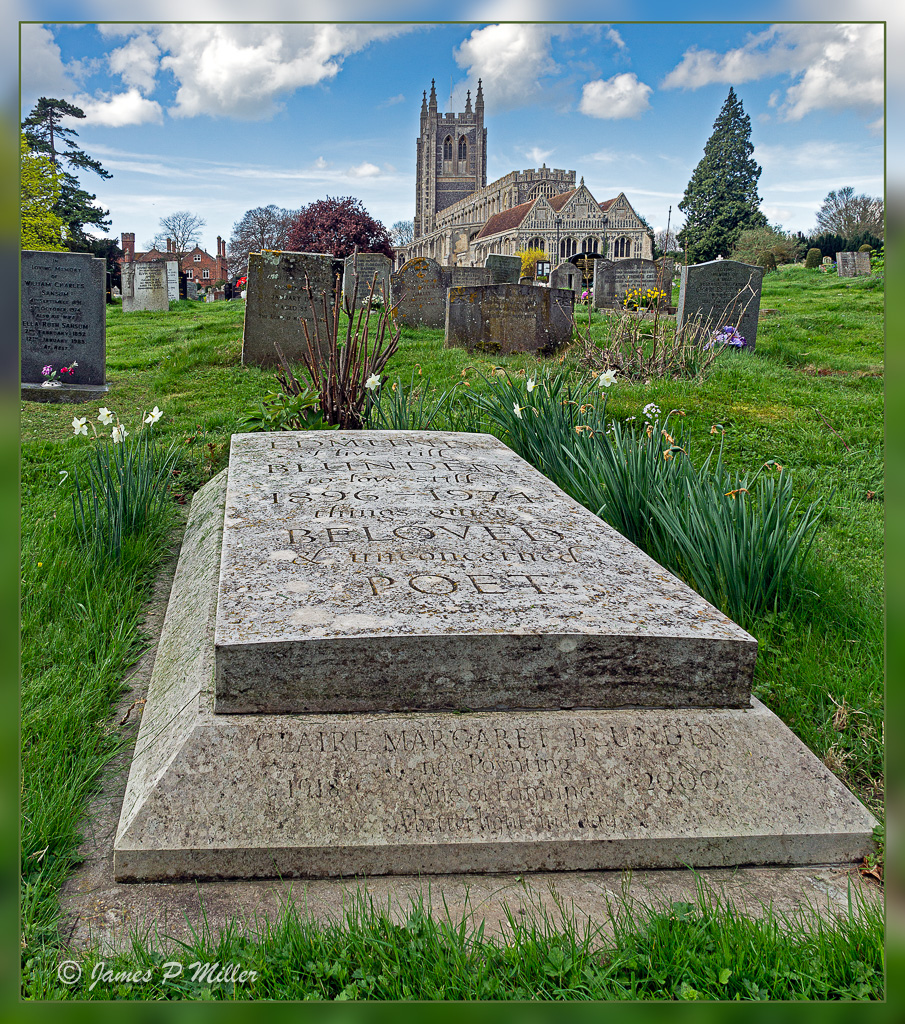
Heading north from Sudbury on the A134 to Bury St Edmunds you will find Long Melford on your left about ten minutes into your journey the last resting place of Edmund Blunden the first world war poet and author of Undertones of War.

Edmund Blunden’s Grave in the shadow of Holy Trinity Church, Long Melford, Suffolk

“Cricket to us was more than play, It was a worship in the summer sun.” Edmund Blunden

Around the same time as you travel on your journey you could be forgiven for not noticing the direction on the right to the village of Acton, it has much of interest the Murder of John Foster by his wife Catherine by dumpling poisoning, ghostly horses, hidden treasure and the connection to Charles Dickens and Bleak House.

Deep in the vaults of All Saints Church, Acton, Suffolk is laid to rest beside his Mother and Father The Miser of Acton, William Jennens, when he died at the age of 96 on the 19 June 1798  he was known as the richest commoner in England., what happened next in his story some believe was one of Charles Dickens inspirations for the  Jarndyce v Jarndyce case in his novel Bleak House.

The case of Jennens v Jennens went on for over 100 years and if you would like to find out more about William Jennens, his family and connection to Charles Dickens and Bleak House, Charles Dickens and the Great Jennens Case by Laurence Ince is a good place to start.

All Saints Church, Action, Suffolk

“I will die here where I have walked. And I will walk here, though I am in my grave. I will walk here until the pride of this house is humbled.”Bleak House


Suffolk Churches All Saints Church Acton

Charles Dickens and the Great Jennens Case by Laurence Ince

WEIRD SUFFOLK: Could the Acton Miser have returned from the grave to protect his riches?

The Hanging of Catherine Foster

Edmund Blunden.org

Echos of Kent Treble Bob Majors and Terrington St Johns

The village of Terrington St Johns, Norfolk sits between Wisbech in the west and Kings Lynn in the east. Its splendid St John’s Parish Church lies to the north of the village at Peyke’s Cross.

St John The Baptist Church, Terrington St Johns

St John The Baptist Church

I have never seen any reference that links it to the novel by Dorothy. L. Sayers, The Nine Taylors unlike its near neighbour Terrington St Clements, but during a recent visit I was reminded of The Reverend Venables vaulting ambition by a plaque in the church commemorating a peel of bells, although Theodore Venables and his ringers had eight Bells at their disposal where the church at Terrington St Johns has six.

Memorial Plaque Peal of Bells, Terrington St John

Memorial Plaque

“There are, perhaps, a few heavier rings, said the Rector, but I hardly know where you would rival us for fullness and sweetness of tone. Number seven, in particular, is a most noble old bell, and so is the tenor, and the John and Jericho bells are also remarkably fine in fact, the whole ring is most “tuneable and sound”, as the old motto has it.

“It is a full ring of eight”

The Reverend Venables to Lord Peter Wimsey

The Nine Tailors

By Dorothy L. Sayers

A Novel by Anthony Trollope, The Australian Outback and Mepal A Village In The Fens

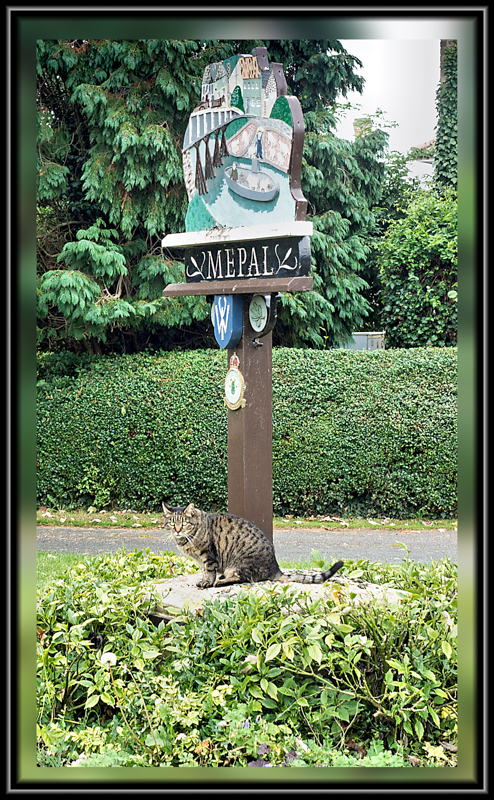
The village of Mepal sits on the eastern edge of the Hundred Foot Washes, in days gone bye the traffic to and from the City of Ely would trundle through the village passing over the Old and New Bedford Rivers and the Three Pickerels public house.

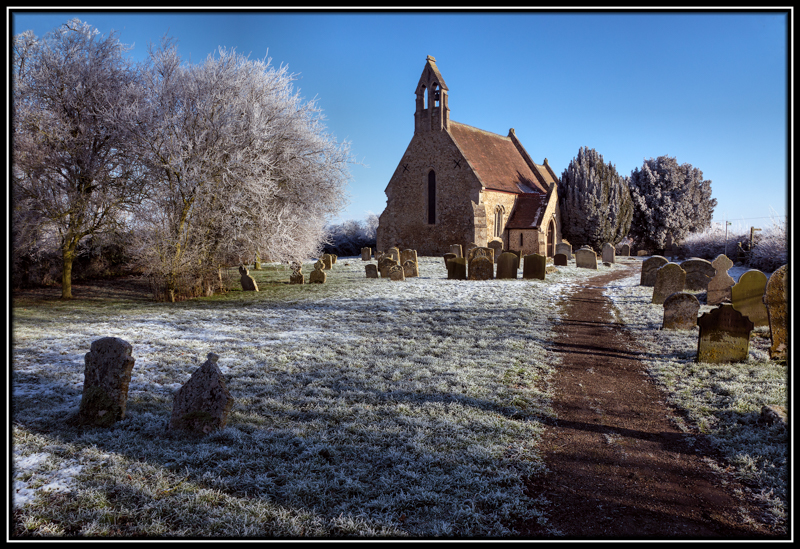
St Marys Church, Mepal

St Marys Church, Mepal

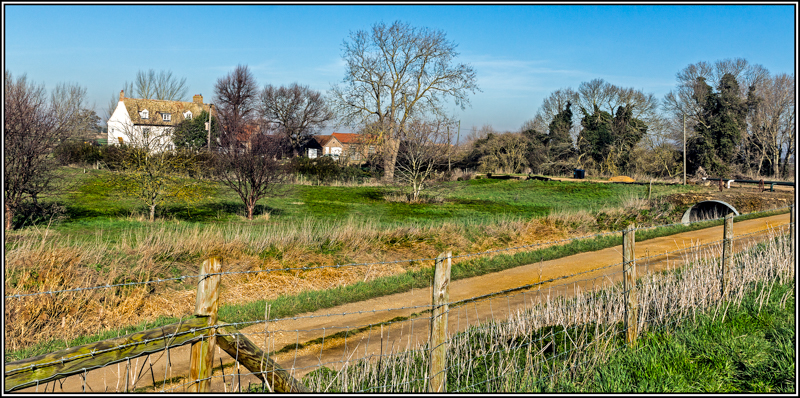
On the western edge of the Hundred Foot Washes you will find Engine Bank which runs northward along the Counter Drain and The Old Bedford River (River Delph) taking you passed the Mepal Pumping Station and Fortrey’s Hall, onto Welshes Dam and Welney in Norfolk.

Mepal Pumping Station

Mepal Pumping Station

John Fortrey a London merchant built the hall and his son Sir James Fortrey was responsible for extending the building, there is a plaque in the small church of St Marys, Mepal to Sir James commemerating his adventures, the Fortrey Family were heavily involved along with the Duke of Bedford in the drainage of The Fens.

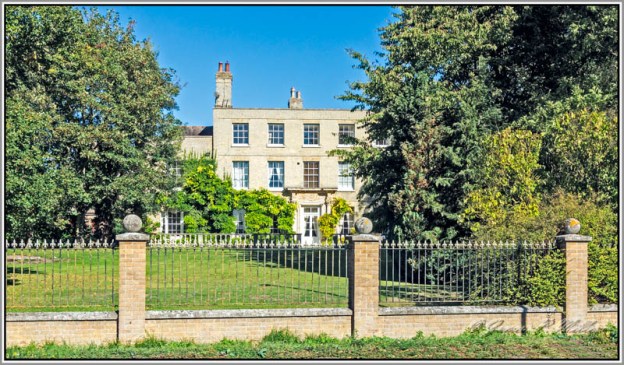
Fortrey's Hall

Fortrey’s Hall

Fortrey Hall and the surrounding area is featured in Anthony Trollope’s novel John Caldigate which was first published 1879, not as well-known as his Barchester Chronicles but can be recommend as good read on a cold winters evening, it takes in places as far apart as the Australian Outback, Newmarket, Cambridge and The Cambridgeshire Fens. The description of the area in the novel in my view is not very flattering and certainly not one in which I agree!

“Folking is not a place having many attractions of its own, beyond the rats. It lies in the middle of the Cambridgeshire fens, between St. Ives, Cambridge, and Ely. In the two parishes of Utterden and Netherden there is no rise of ground which can by any stretch of complaisance be called a hill. The property is bisected by an immense straight dike, which is called the Middle Wash, and which is so sluggish, so straight, so ugly, and so deep, as to impress the mind of a stranger with the ideas of suicide. And there are straight roads and straight dikes, with ugly names on all sides, and passages through the country called droves, also with ugly appellations of their own, which certainly are not worthy of the name of roads. The Folking Causeway possesses a bridge across the Wash, and is said to be the remains of an old Roman Way which ran in a perfectly direct line from St. Neots to Ely. When you have crossed the bridge going northward,—or north-westward,—there is a lodge at your right hand, and a private road running, as straight as a line can be drawn, through pollard poplars, up to Mr. Caldigate’s house.”

From: Anthony Trollope’s John Caldigate, Chapter I: Folking


Web Sites of Interests:

Parks and Gardens Fortreys Hall

Mepal Parish Web Site

Mepal

Ouse Washes Mepal Pumping Stations

Dorothy L Sayers Childhood Memories, Bluntisham

At the end of 1897, the future great crime novelist and classical scholar Dorothy L Sayers arrived at the railway station of Bluntisham cum Earith in the Fenlands of Huntingdonshire, she was between four and five at the time,  in later life she said that she did not remember the train journey from Oxford to Bluntisham but remembered the walk from the station to the rectory. Her Mother and her Father who had just taken up the living of Bluntisham had arrive a few days earlier.

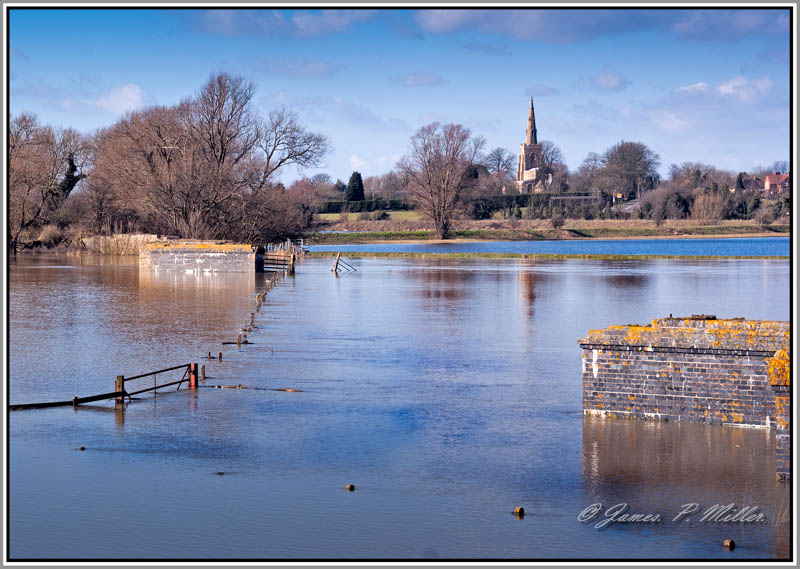
The rectory where Dorothy spent a lot of her childhood, now called Bluntisham House can still be seen as you travel from St Ives in the west to Ely in the north east. The railway station has now long gone but if if you take a walk along the banks of The Great River Ouse you can still see the pillars that supported the rail tracks across the fenland.

SONY DSC

The Photo shows The Great River Ouse in flood, the pillars that supported the tracks in the foreground and St Marys Church,  Bluntisham in the background.


Web Links of Interest:

The Wry Romance of the Literary Rectory by Deborah Alun-Jones

The Official Site of the renowned English crime writer Dorothy L Sayers

The Last Place God Made

In Search of St Paul’s Church Fenchurch St Paul

Dorothy L Sayers Cambridgeshire Connections

A Lake District Connection Norfolk

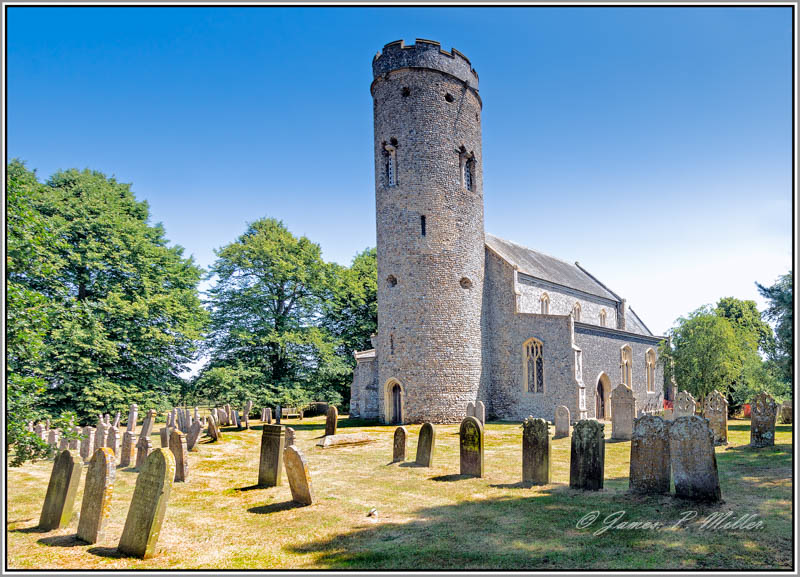
Now if you have a fancy for a trip to the Lake District, the last thing you want is to be sitting in a car heading in the direction of Norwich and Diss, but that is where we found ourselves on a hot sunny day in July. The destination was the small village of Forncett St. Peter, Norfolk.


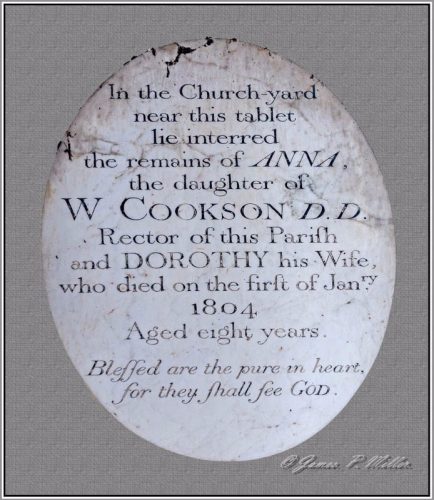
If you think I have lost my bearings never mind my sense of direction you may well be right, but I do have an explanation in that the village of Forncett St. Peter has impeccable Lakeland connections. It is where Dorothy Wordsworth lived and worked for around six years and her brother the famous poet William visited while studying at Cambridge.


St. Peters Church, Forncett St Peter, Norfolk, England

St. Peters Church, Forncett St Peter, Norfolk, England

Cookson Memorial, The Wordsworth Connection, St. Peters Church, Forncett St Peter, Norfolk, England

Cookson Memorial, The Wordsworth Connection, St. Peters Church


The Gates to The Old Rectory, Forncett St. Peter, Norfolk, England


Useful Links:

Treasures of the Wordsworth Trust

Biography of Dorothy-Wordsworth

“Villagers de luxe” Swaffham Prior

If you happened to be passing Swaffham Prior Cambridgeshire, lets say from Cambridge on your way to Newmarket in late 1958, you may have noticed a couple, walking sticks in hand supporting one another as they slowly progress up the slight incline from their cottage to the twin churches of St Mary’s and St Cyriac and St Julitta.

The couple are Edwin Muir, Orcadian, Poet, Critic and Translator and his wife Willa, Novelist, Translator and Essayist, they have been living in Priory Cottage, Swaffham Prior since August 1956 and this short occasional walk was all that Edwin could manage in what turned out to be the last few weeks of his life.

Willa describes their time in The Village of Swaffham Prior in Chapter 21 of her book Belonging.

Priory Cottage, Swaffham Prior, Cambridgeshire from The Church of St Cyriac and St Julitta

“From any outside angle the cottage looked attractive. It had a walled garden behind it, as well as a garage; its front door was on the main street of the Village and we walked straight into a spacious sitting-room, made out of two original small rooms which gave two different heights to the ceiling. Most old English cottages are cursed with very small rooms, and as soon as we walked into this large room we nodded to each other and said: “This is it.”

The front casement windows looked out on two parish churches, one on either side of a hill. The left-hand one had a dilapidated octagonal Norman tower, but its nave had been roofed over in the nineteenth century and except for the tower it was weatherproof. The right-hand one was in Perpendicular style; it had a fine tall belfry, quite whole, and a clock—face, but its nave was a ruined shell.”

From Belonging by Willa Muir

“One unexpected pleasure was added, the excellent peal of eight bells in the tower of the right-hand church opposite our cottage. When the Fens used to be flooded, the little hill was a place of refuge well above the waters, and the bells had sounded over the countryside as a guide.

They were such good bells that the champion bell-ringers of the district, in the neighbouring village of Burwell, used to spend a whole Saturday afternoon every now and then practising on them. We listened with delight to the intricate patterns they played, as the bells wove in and out; this was a new experience to us, for that art of bell-ringing is found only in England and we had never before lived beside a peal of such bells.”

From Belonging by Willa Muir

Now is that not reminiscent of Dorothy L Sayers Nine Taylors!

If you take the time to follow in their footsteps and continue along the path which winds past the Church of St Cyriac and St Julitta, (Willa’s Right Hand One) which is now under the care of The Churches Conservation Church you can exit the old graveyard through the top right hand corner gate and into the modern burial ground where today you will find the last resting place of Edwin and Willa Muir and perhaps “sit on the bench under a great round of sky.”

Edwin and Willa Muir’s Last Resting Place

Edwin and Willa Muir’s grave with the tower of St Cyriac and St Julitta in the background


Useful Links:

Edwin Muir

Willa Muir

The Last Place God Made

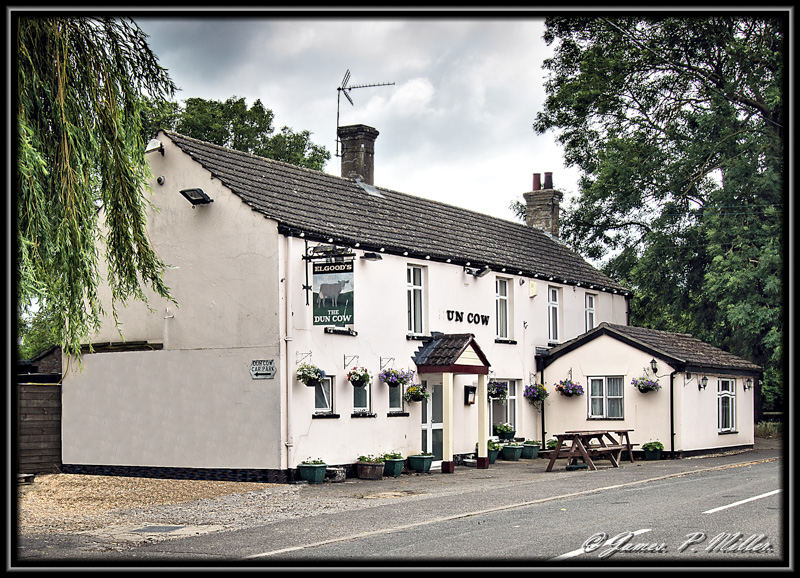
The Dun Cow, Christchurch

The Dun Cow, Christchurch, Cambridgeshire, Engalnd

The Dun Cow in Christchurch on the Cambridgeshire Norfolk boundary where the author Dorothy L Sayers Father was rector until his death in 1928. At one time there was a total of three pubs in the area but today the Dun Cow is the only one left to feed and water the hungry.

Dorothy’s description of Christchurch is to the point and says it all;
“Christchurch is the last place God made, and when He’d finished he found He’d Forgotten the staircase!”

I like the idea of Dorothy and her Husband Mac visiting her Mother and Father in Christchurch and on Sunday mornings attending church, as soon as the Reverend Sayers had pronounced the benediction Mac would be seen making his way to the Dun Cow public house.

Jane Austen, Bath, A Church In Rutland and A Line From Northanger Abbey

Now I must own up to being partial to a Jane Austen story, I have a preference for the written rather than the celluloid but that does not mean that I have not indulged in watching Amanda Root in Persuasion.

It still remains a favourite although Northanger Abbey with Peter Firth comes a close second, not because it is a purest version or is faithful to any preconceived notions of how a Jane Austen novel should be represented, it is simply because Bath features in all its splendour and secondly due to the final declaration by Mr Tilney to Mrs Moorland ,

“I promise not to oppress you with too much remorse or too much passion; but since you left us the white rose bush has died of grief.”

Yes I know it is not Jane Austen and therefore not in the novel but it does appeal to my sense of the romantic or some would say the ridiculous.

The pictures Below are of St Peters Church, Brooke in the county of Rutland it featured In the 2005 film version of Pride and Prejudice staring Keira Knightley as Miss Bennett.

Leighton Bromswold Huntingdonshire

The House That George Built

St Mary’s Church, Leighton Bromswold, Huntingdonshire.

St Mary’s Church in Leighton Bromswold Huntingdonshire, in 1626 it was in a deplorable state of decay when the poet George Herbert was inducted as Prebend.

He made it his mission to raise the funds and restore the church along with the help of his friend Nicholas Ferrar and his brother John of Little Gidding.

THE CROSS.
By George Herbert

What is this strange and uncouth thing?
To make me sigh, and seek, and faint, and die,
Until I had some place, where I might sing,
And serve thee; and not only I,
But all my wealth, and family might combine
To set thy honour up, as our design.

And then when after much delay,
Much wrestling, many a combat, this dear end,
So much desir’d, is giv’n, to take away
My power to serve thee; to unbend
All my abilities, my designs confound,
And lay my threat’nings bleeding on the ground.

One ague dwelleth in my bones,
Another in my soul (the memory
What I would do for thee, if once my groans
Could be allow’d for harmony):
I am in all a weak disabled thing,
Save in the sight thereof, where strength doth sting.

Besides, things sort not to my will,
Ev’n when my will doth study thy renown:
Thou turnest th’ edge of all things on me still,
Taking me up to throw me down:
So that, ev’n when my hopes seem to be sped,
I am to grief alive, to them as dead.

To have my aim, and yet to be
Farther from it than when I bent my bow;
To make my hopes my torture, and the fee
Of all my woes another woe,
Is in the midst of delicates to need,
And ev’n in Paradise to be a weed.

Ah my dear Father, ease my smart!
These contrarieties crush me: these cross actions
Do wind a rope about, and cut my heart:
And yet since these thy contradictions
Are properly a cross felt by thy Son,
With but four words, my words, Thy will be done.

We have visited Leighton Bromswold in Huntingdonshire on many occasions stopping to look around the outside of The Church of St Mary’s as we have never found it open.

Well today was different, as we went to drive past on our way to who knows where, to our pleasant surprise there was a notice announcing that the church was open, hastily parking the car we were able to fulfil a long time ambition and were not in the least disappointed.

St Mary's Church, Leighton Bromswold, Huntingdonshire.

The Inside of St Mary’s Church, Leighton Bromswold, Huntingdonshire.

With its Pulpit and Reading Desk of the same size

St Mary's Church, Leighton Bromswold, Huntingdonshire.

St Mary the Virgin Church, Leighton Bromswold, Huntingdonshire.

 Its tower dominating the countryside.

St Mary's Church, Leighton Bromswold, Huntingdonshire

St Mary’s Church, Leighton Bromswold, Huntingdonshire