Category Archives: Photo Journal

Stoke Doyle

If I were to mention the name Stoke Doyle I would imagine that you would be transported to The Republic of Ireland, perhaps to County Clare, Galway or Sligo.

It could even conjure up a fictional detective of Irish decent who is partial to a Jamison’s for breakfast, has a practice in handling sordid divorce cases in New York’s Irish quarter and whose immediate relations emigrated to America in the depression.

So do not be surprised when I tell you that Stoke Doyle is a picturesque village in East Northamptonshire.

It lies around two miles south east of Oundle, famous for its School and The Talbot Hotel built from the stones removed from Fotheringhay Castle where Mary Queen of Scots lost her head.

The River Nene runs to the east of the village which used to be on the edge of Rockingham forest before deforestation in 1638.

We have passed through this village more times than I care to remember having always failed to stop but today we headed the car down the lane opposite the village inn to the church of St Rumbald’s.
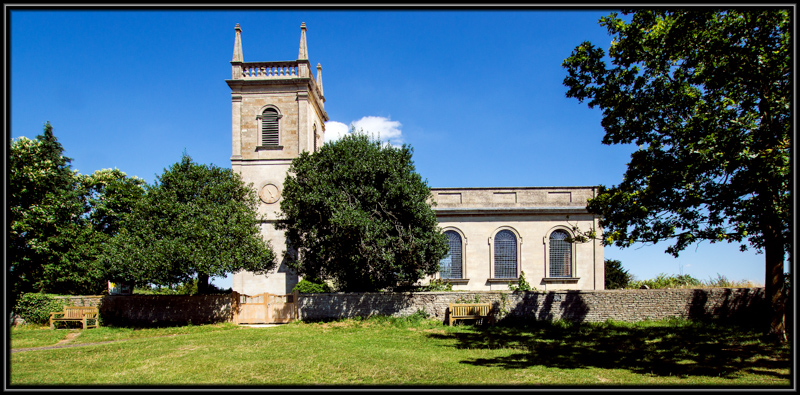
20130801_Northamptonshire-23-319-321

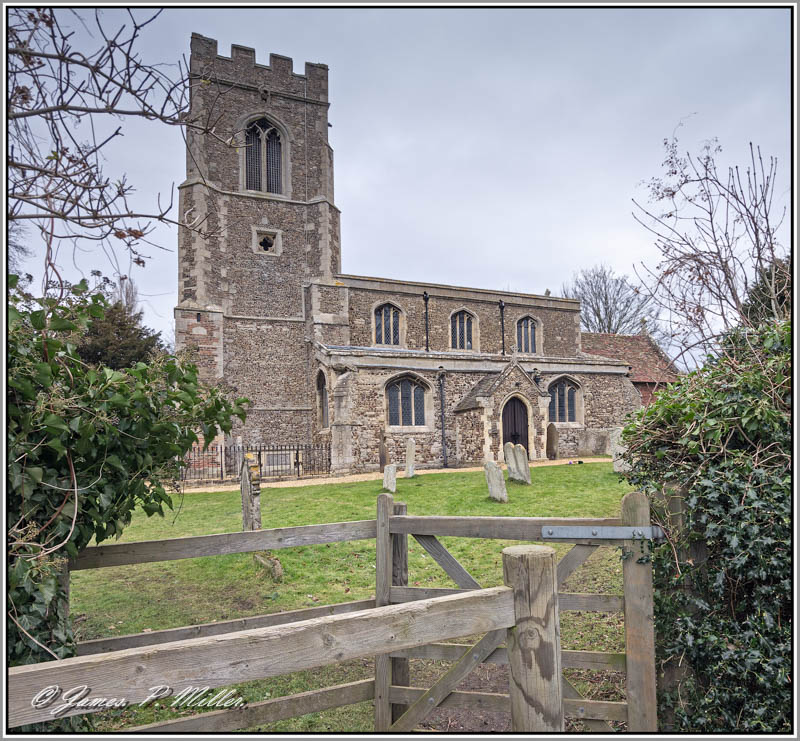
St Rumbald’s Church, Stoke Doyle, East Northamptonshire, England

The church exterior has its own charm and has been described as having a plain classical structure, it is when you enter through the south door into the nave that you feel you have arrived at somewhere special, but it is only when you walk towards the chancel and look left that you are presented with the unexpected.

The mortuary chapel is gated and contains an elaborate marble monument to Sir Edward Ward, Knight, Lord Chief Baron of the Exchequer reclining in judge’s robes, said to be by Rysbrack, adding to the  element of surprise.
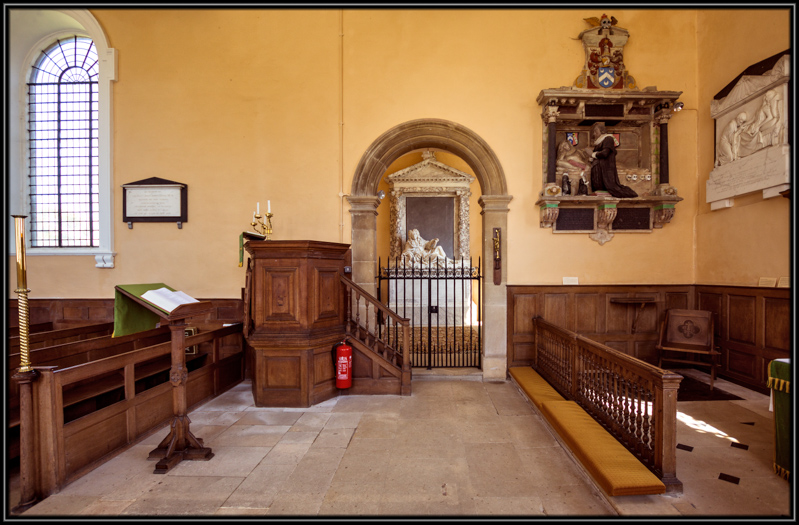
20130801_Northamptonshire-16-320

 The Mortuary Chapel, St Rumbald’s Church, Stoke Doyle, East Northamptonshire, England
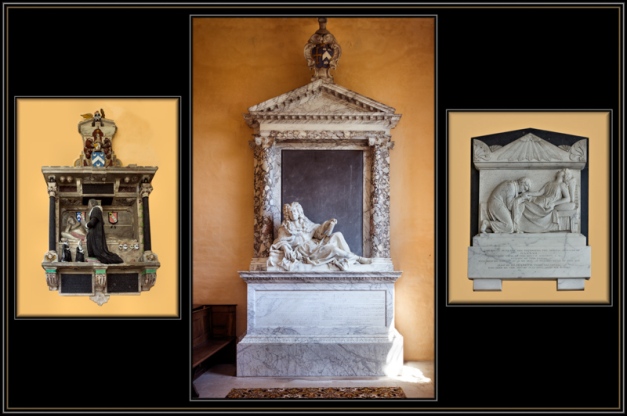
20130801_Northamptonshire-16-320-327

Memorial Collage, St Rumbald’s Church, Stoke Doyle, East Northamptonshire, England

On leaving the church it is your choice but before taking the main road to Oundle you could indulge in a small dram of Jamison’s at The Shuckburgh Arms, as long as you are not driving.
Aldwincle Northamptonshire Revisited

In a time gone by there were two Aldwincle Parishes, Aldwincle St Peters and Aldwincle All Saints they were joined together in November 1879.

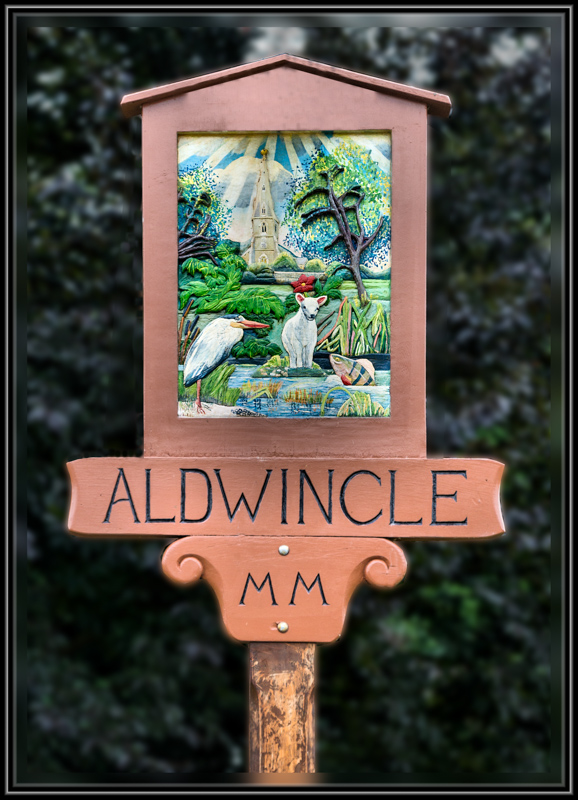
Aldwincle Village Sign

Aldwincle Village Sign Northamptonshire

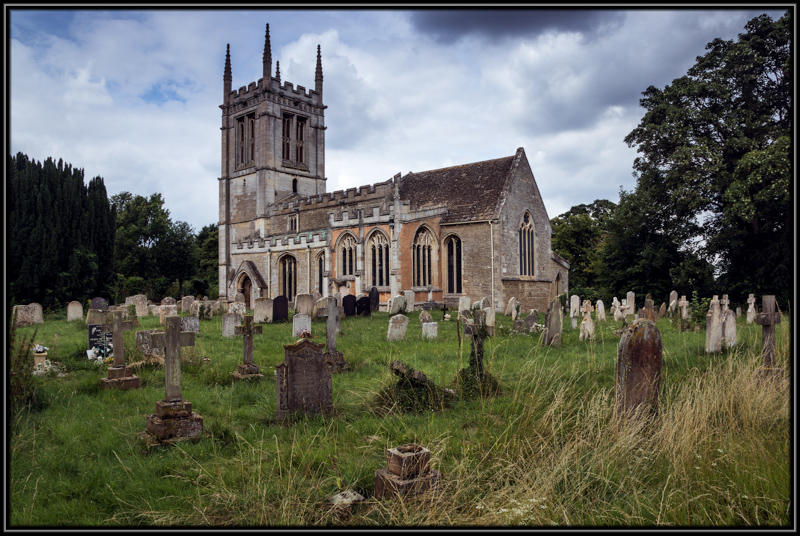
To all appearances it is St Peters that is now the center of village life as All Saints sits a world apart opposte Dryden house on the way to Thorpe Waterville across  Harper’s Brook and over the Nene river by Brancey Bridge.

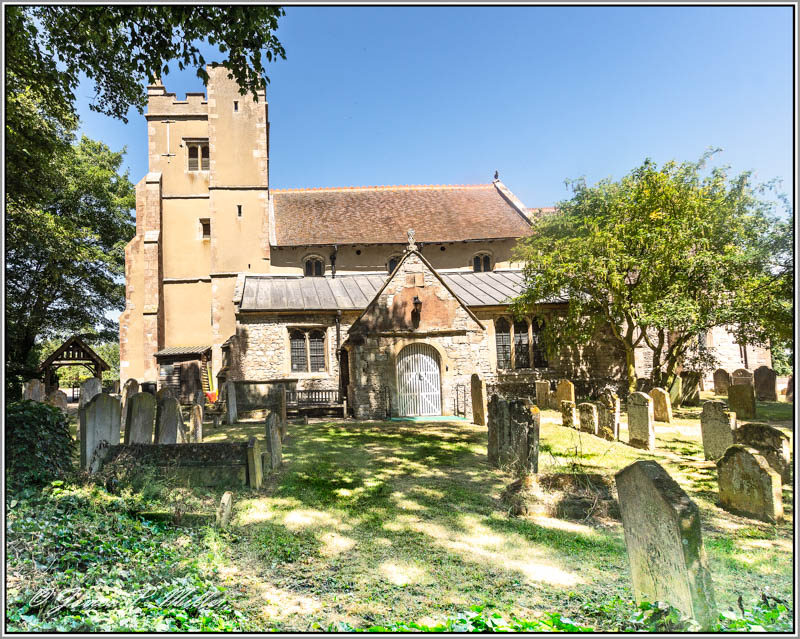
All Saints Church Aldwincle Northamptonshire

John Dryden poet, playwright and critic was born in the house that sits in the shadow of church on the 9 August 1631. Dryden House Aldwincle Northamptonshire

Dryden House Aldwincle Northamptonshire

Son of Erasmas Dryden and Mary Pickering of Titchmarsh he was Christened in the Church of All Saints where his grandfather Henry Pickering was Rector were there is a tablet commemorating the event.

20130807_Northamptonshire-13-331

Church Commemorative Tablet

All Saints Church is now in the care of The Church Conservation Trust as it is no longer needed for regular worship but remains as consecrated buildings and is of historical importance, it is a delight to walk round and has always been open when ever we have visited.

SONY DSC

All Saints Church Striking Interior

20130807_Northamptonshire-12-332

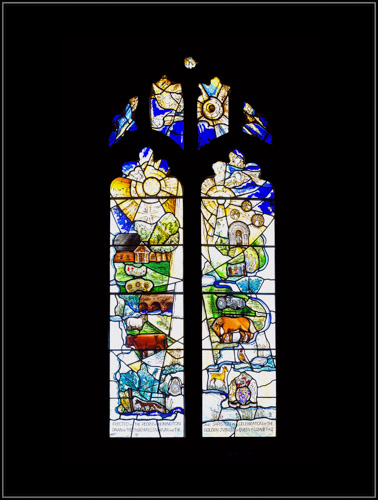
All Saints Church Stained Glass Window

Samuel Johnson summed up the general attitude to John Dryden with his remark that

 “the veneration with which his name is pronounced by every cultivator of English literature,

 is paid to him as he refined the language, improved the sentiments,

and tuned the numbers of English poetry.”

and tuned the numbers of English poetry.”

And T. S. Eliot wrote that he was

‘the ancestor of nearly all that is best in the poetry of the eighteenth century’,

and that ‘we cannot fully enjoy or rightly estimate a hundred years of English poetry

unless we fully enjoy Dryden.’


The Crest of A Scottish Clan, A Peel of Bells, Lord Peter Winsey and The Art of Cation Writting.
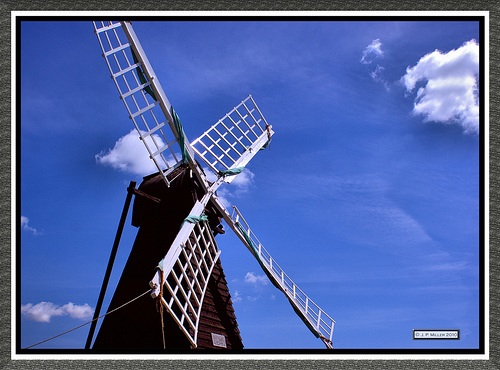
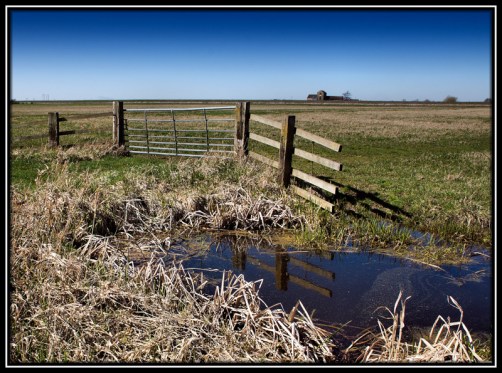
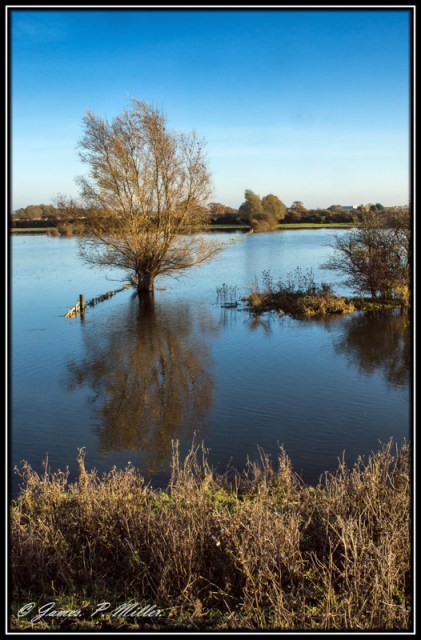
Walking in the Cambridgeshire fens along the Ouse Washes between The Bedford Rivers is always a comfort to a weary soul and evocative of The Nine Taylors by Dorothy L Sayers especially when the washes are in full flood.

20120326-Cambridgeshire-00034-C

With camera in hand it is always tempting to capture the wide open space, the large sky, reflections in the flood plain or Fortrey’s pumping station standing on Engine Bank against a cloudy sky.

20121114_Cambridgeshire_00034-19-C

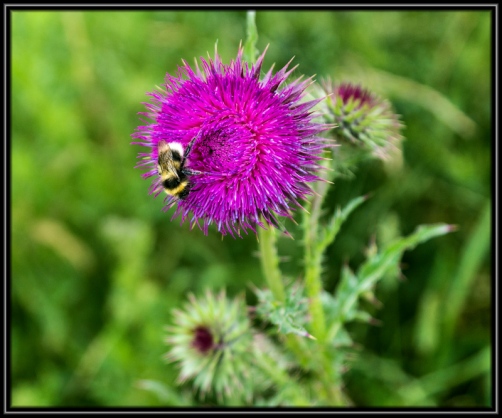
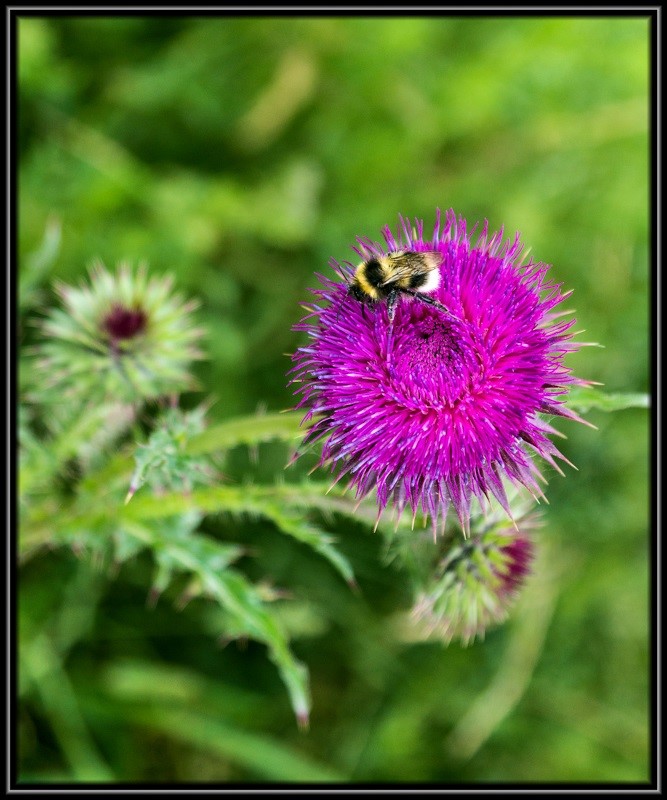
There are endless possibilities in the detail of the landscape like the bee seeking substance from the thistle on the bank of the hundred foot drain. The problem arises when trying to find a caption appropriate for the composition.

20130710_Cambridgeshire-24-295-C

Now as mentioned this is the land where Lord Peter Wimsey applies his analytic mind to discovering the location of the Wilbraham emeralds and the murderer of the butler Deacon but try as I may I can find no correlation to the thistle and the bee but if we take a leaf out of Lord Peter’s book and apply some meticulous reasoning, like the landscape itself there are endless possibilities.

Shakespeare’s Midsommer Nights Dream could be applied where Bottom states

Mounsieur Cobweb, good mounsieur, get you your

weapons in your hand, and kill me a red-hipped

humble-bee on the top of a thistle; and, good

mounsieur, bring me the honey-bag. Do not fret

yourself too much in the action, mounsieur; and,

good mounsieur, have a care the honey-bag break not;

I would be loath to have you overflown with a

honey-bag, signior. Where’s Mounsieur Mustardseed?

or we could turn to the poet Ted Hughes for The Thistle

Against the rubber tongues of cows and the hoeing hands of men

Thistles spike the summer air

And crackle open under a blue-black pressure.

Not to mention Sylvia Plath for the bee or perhaps Emily Dickinson

and her poem entitled There is a Flower that Bees Prefer

There is a flower that Bees prefer —

And Butterflies — desire —

To gain the Purple Democrat

The Humming Bird — aspire —

And Whatsoever Insect pass —

A Honey bear away

Proportioned to his several dearth

And her — capacity —

Her face be rounder than the Moon

And ruddier than the Gown

Or Orchis in the Pasture —

Or Rhododendron — worn —

We could even use a quote or two from A A Milne’s Winnie-the-Pooh due to his love of honey and his friend Eeyore’s passion for thistles.

If we were looking for a more modern example then A Single Thistle by Raymond A. Foss could be appropriate but as he reminds us, if we need reminding that the thistle is the flower of Scotland

therefore it has to be the motto and the crest of The Clan Fergusson as this uses both the bee and the thistle and also appeals to my Scottish roots.

20130710_Cambridgeshire-24-295-C1

Title: dulcius ex asperis

Caption: A Bee on a Thistle

The crest of The Clan Fergusson

Their Motto: dulcius ex asperis (sweeter after difficulties).

Found living on The Ouse Washes, The Fens, Mepal, Cambridgeshire


Honington and Sapiston: In Search of Robert Bloomfield

If you mention the name of Honington in Suffolk I would imagine that it is the RAF base that springs to mind and not the birthplace of a sadly neglected Romantic poet.

Honington lies to the North East of Bury St Edmunds and the South East of Thetford the birth place of Thomas Paine the author of the Rights of Man.

Although it is Honington Raf base which is most famous, the village which it takes it name from lies about a mile to the west of The RAF Base.

Robert Bloomfield the author of A Farmers Boy which was a publishing sensation was born here on the 3rd December 1766 he was educated by his mother who run the village school until he was a eleven when he was sent to work on his Uncle William Austen’s farm across the river Blackbourn in Sapiston.

20130415_Suffolk_05-210image description20130415_Suffolk_04-21120130415_Suffolk_01-207

NEGLECTED now the early daisy lies:

Nor thou, pale primrose, bloom’st the only prize:

Advancing SPRING profusely spreads abroad

Flow’rs of all hues, with sweetest fragrance stor’d;

Where’er she treads, LOVE gladdens every plain,

Delight on tiptoe bears her lucid train;

Sweet Hope with conscious brow before her flies,

Anticipating wealth from Summer skies;

All Nature feels her renovating sway;

The sheep-fed pasture, and the meadow gay;

And trees, and shrubs, no longer budding seen,

Display the new-grown branch of lighter green;

On airy downs the shepherd idling lies,

And sees to-morrow in the marbled skies.

From A Farmers Boy, Spring by Robert Bloomfield


Offord Cluny and D’Arch Cambridgeshire

Offord D’Archy and Offord Cluny makeup what is locally called The Offords.

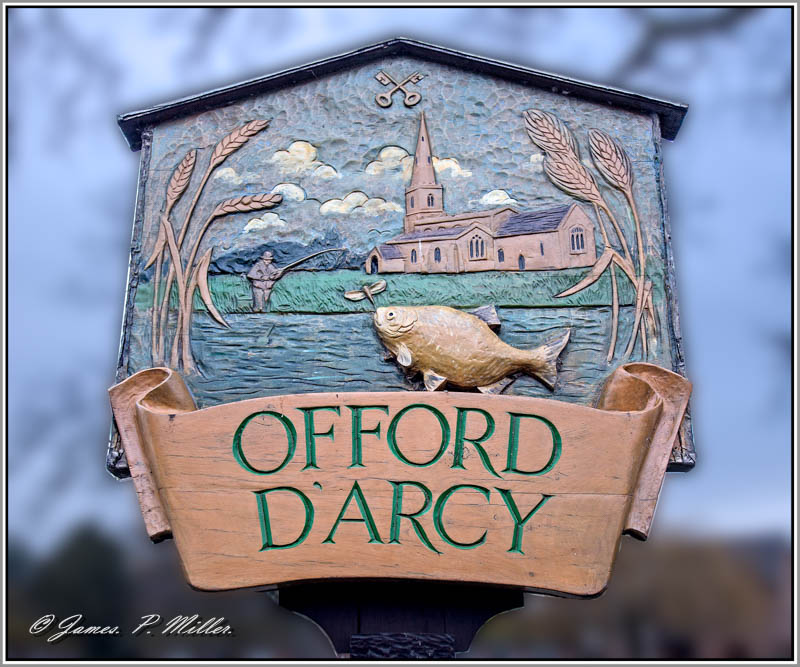
Offord D'Arcy Village Sign

Offord D’Arcy Village Sign, Offord D’Arcy, Cambridgeshire, England

Although the two villages are only two miles apart they both have their own church and manor houses, the villages are fairly low lying and can be prone to flooding from The Great River Ouse, both are mentioned in the doomsday book.

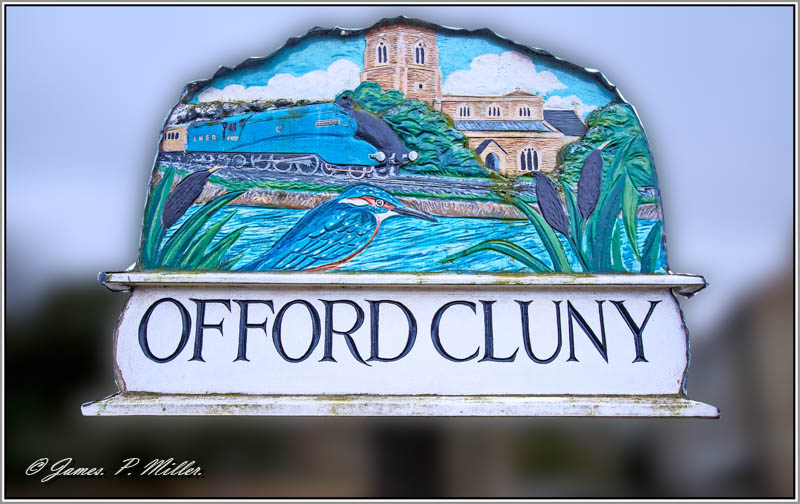
Offord Cluny, Village Sign

Village Sign, Offord Cluny,, Cambridgeshire, England

The Offords sit between the eastern bank of The Great River Ouse and The Old North Road, Ermine Street before they make their way into Godmachester and Huntingdon beyond.

All Saints Church, Offord Cluny,

All Saints Church, Offord Cluny,, Cambridgeshire, England

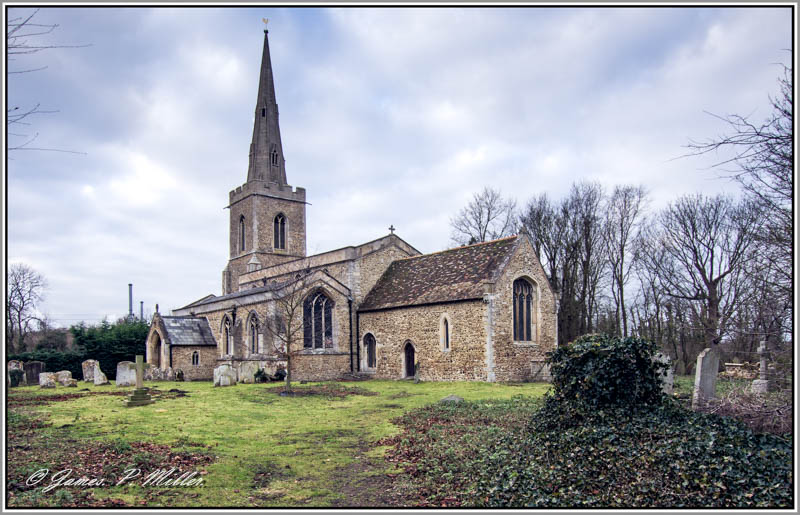
St Peters church Offord D’Arcy has a 14th Century tower and spire it sits beside the manor house, to all appearance it is a peaceful situation until a fast train thunders past on it way to York and Edinburgh, in fact the main coast railway line runs very close to the west of the church tower.

St Peters Church, Offord D'Arcy

St Peters Church, Offord D’Arcy, Cambridgeshire, Engalnd


In The Footsteps of The Good Doctor

Langton by Spilsby Lincolnshire Wolds.

Langton by Spilsby Lincolnshire Wold

“Early in 1764 Dr Samuel Johnson paid a visit to the Langton Family, at their seat of Langton, in Lincolnshire, where he passed some time, much to his satisfaction.”

Quoted from The Life Of Samuel Johnson by James Boswell

Although Langton Hall in Langton by Spilsby in Lincolnshire no longer stands the church of St Peter and St Paul and its environs are a delight to explore and if you feel energetic you can emulate the good doctor and roll down the sheep walks.

20130430_Lincolnshire_22-231

Dr Johnson is said to have visited The church of St Peter and St Paul while visiting his good friend Bennet Langton a founder member of the literary club.

The present church was erected by Bennett’s grandfather George in 1725, when the great man of letters visited the roof would have been covered in lead unlike today, it is said that the lead was removed to be turned into bulletts for use in the Napoleonic Wars.

“War involves in its progress such a train of unforeseen circumstances that no human wisdom can calculate the end; it has but one thing certain, and that is to increase taxes.”

Thomas Paine

St Peter and St Paul Church

The setting and the exterior of the church building is extremely charming but it is when you enter that you experience the full impact and appreciate why it has gained its reputation with the great and good.

20130430_Lincolnshire_10-229

20130430_Lincolnshire_19-230


Wicken Cambridgeshire,

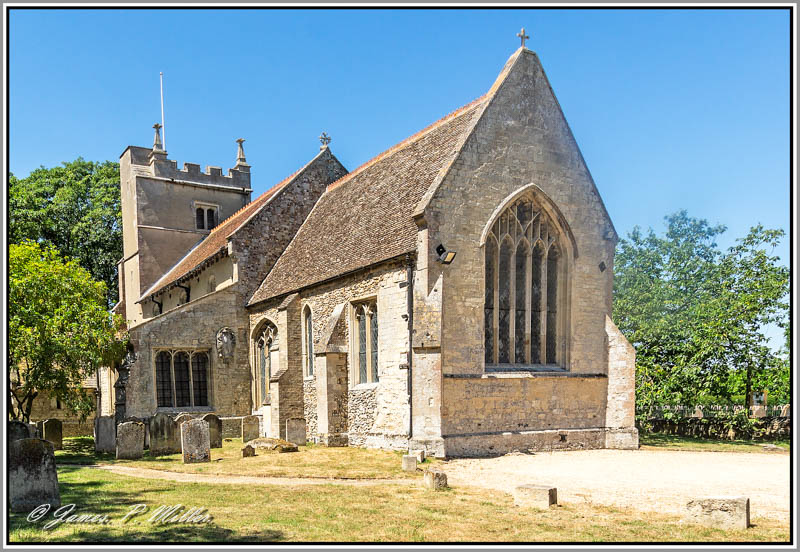
St Laurence Church, Wicken

St Laurence Church, Wicken, Cambridgeshire, England

Wicken is a village situated north of Cambridge south of Ely sitting between Stretham in the west, Fordham in the east and Newmarket in the south east. Its is known for its sausages and Wicken Fen which is managed by the National Trust, (the fen not the sausages).

The church of St Laurence is on the outskirts of the village to the west and is the last resting place of Henry Cromwell and his wife.

Henry was the fourth son of Oliver Cromwell, he retired first to Chippenham where his father in law was a MP on the restoration of Charles II. In his final years he acquired Spinney Abbey on the outside of Wicken.

There is a legend that says Charles Stuart visited Henry while horse racing at Newmarket but most historians say this is most unlikely. Henry Cromwell died in 1674 and there is a commeration slab in the church which belies the powerful man resting below.

St Laurence Church, Wicken

St Laurence Church, Wicken, Cambridgeshire, England

Views Near Wicken Cambridgeshire England


Wood Walton Cambridgeshire

Glorious Isolation St Andrews Church Wood Walton

St Andrews Church, Wood Walton,

St Andrews Church, Wood Walton, Cambridgeshire, Engalnd

St Andrews Church sits in glorious isolation over looking the main east coast railway line before it makes its way on to Peterborough and the frozen north beyond.

It is located about a mile outside the current village and access is first along a road going only to a small number of homesteads and then what only can be described as a field track through a five bar gate down to the church.

We have paid this church a visit on two seperate occasions, the first was on a sunny afternoon and to compliment its isolation we found the doors firmly locked and not a soul to be found.

The second visit found the builders hard at work carrying out restoration work and excessive repairs where damaged had been sustained due to thieves in the night indiscimitly filling there pockets and transit van, apparently nowhere was sacred as the broke into the vault below in the hope of finding lead from a previous century. The workman were friendly and more than happy to let us look around but it was sad to see it in such circumstances.

St Andrews Church, Wood Walton,

St Andrews Church, Wood Walton, Cambridgeshire


Willoughby Lincolnshire: The Pocahontas Connection

The year was 1607, Mary Queen of Scotts only son was king of England,  Scotland and Ireland and on the north bank of The Haven Boston Lincolnshire  the Scrooby Separatists later to be known as The Pilgrim Fathers made their  first attempt to escape and seek religious freedom.

Also the first English settlement in the New World in Jamestown Virginia  North America had just been established. Among the hundred and five men who  set sail from London a year earlier was a Lincolnshire son named John Smith  of Willoughby, he was responsible for establishing trading links with the  American Indians.

It was during this time that he was captured by a group of Indians who  murdered some of his companions and threatened to execute him but according  to the story John Smith told he was rescued from this fate by the  intervention of the eleven year old Pocahontas who pleaded for his life.

John Smith became president of Virginia in 1608 returning to England in  1609.

In 1614 Pocahontas married John Rolfe of Heacham Norfolk.

St Helenas's Church Willoughby LincolnshireSt Helenas’s Church Willoughby Lincolnshire

John was born in Willoughby Lincolnshire in 1579. He was Baptised in St  Helenas’s Church on the 9th January 1580.

He died in London in 1631.

The Stained Glass Windows from left to right: The Western Window, The John Smith Window and The Eastern Window

The Stained Glass Windows from left to right: The Western Window, The John Smith Window and The Eastern Window

This slideshow requires JavaScript.

Detail taken for the three stained glass windows St Helenas’s Church Willoughby Lincolnshire Commemorating John Smith’s Life and Times


The Pilgrim Fathers Monument, Fishtoft, Boston, Lincolnshire

Boston Lincolnshire as far as I can remember has always been a challenge to navigate, it seems to be constantly full of cars making their way either into Tennyson country, The Lincolnshire Wolds or the seaside resort of Skegness. Our destination is not so far afield but is the village of Fishtoft on the outskirts of the town then from there onto the banks of The Haven.

The River Witham arrives in Boston Lincolnshire where it flows into The Haven which is a tidal inlet of The Wash.

It is on the north bank of The Haven that you will find a monument to The Pilgrim Fathers, it was here in 1607 that the Scrooby Separatists later to be known as The Pilgrim Fathers made their first attempt to escape and seek religious freedom abroad as they had been refused leave to legitimately emigrate. They planned to sail to Holland but the captain betrayed them and they were return to Boston.

Pilgrim Fathers Monument  The Haven Lincolnshire

Near this place in September 1607

those later known as the

Pilgrim Fathers

were thwarted in their first attempt to sail

to find religious freedom across the seas.

Erected 1957

Parish Church of St Guthlac Fishtoft Lincolnshire

Parish Church of St Guthlac Fishtoft Lincolnshire