Category Archives: Photo Journal

Sempringham Lincolnshire

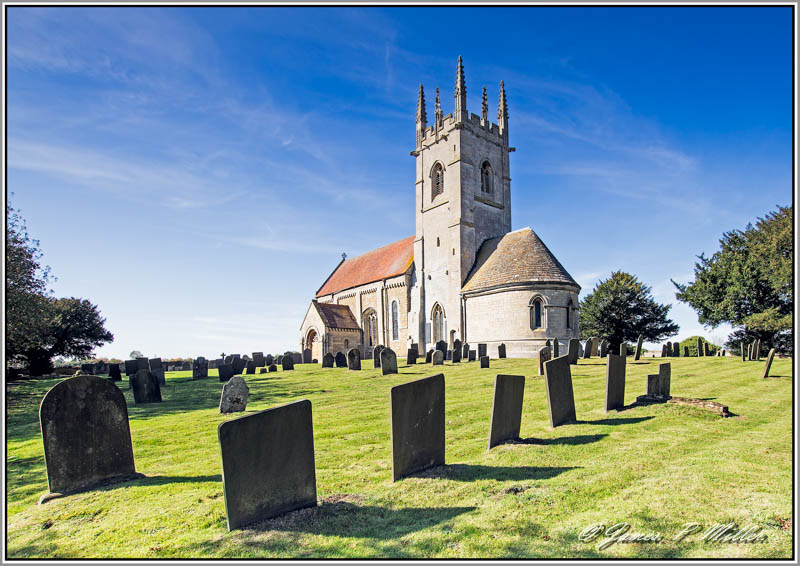
St Andrews Church and The monument to Gwenllian of Wales both sit isolated at the end of a narrow track.

Sempringham_Licolnshire

St Andrews Parish Church and Sempringham Abbey Church

The current church of St Andrews sits to the north of the site where St Mary’s Priory once stood and where Gwenllian of Wales was held captive after being abducted by King Edward I in 1283 until her death .

The priory of St Mary’s was founded by St Gilbert around 1139 and was an order of both Gilbertian monks and nuns, it was destroyed in 1158. The present church once was larger than it is today due to the fact that in 1788 the Norman chancel and transept were taken down because it had become dilapidated.St Andrews Church and The monument to Gwenllian of Wales both sit isolated at the end of a narrow track.

The monument you pass on the way to the church commemorates Gwenllian of Wales, daughter of Llywelyn ap Gruffydd, the last true Prince of Wales.

Gwenllian of Wales

Monument Commemorates Gwenllian of Wales

Gwenllian was abducted by King Edward I in 1283 after the defeat of her father, because she was a threat to King Edward’s hold on power in Wales, rather than kill the infant Gwenllian was taken to Sempringham Priory and kept a captive in order that she remained childless. She spent the rest of her life at St Mary’s Priory Sempringham in Lincolnshire as a nun of The Gilbertian order where she died at 54 in 1337.


St Lawrence Church Snarford Lincolnshire

St Lawrence Church

St Lawrence Church, Snarford, Lincolnshire, England

The small Medieval church of St Lawrence sits to all appearances in the middle of nowhere in the Lincolnshire countryside, it is a classic case for the metaphor, never judge a book by its cover.

Sir Thomas St Paul and Wife

Sir Thomas St Paul and Wife

Sir Thomas was born in 1582 he was an MP, and twice served as Sheriff of Lincolnshire. His wife Lady Faith had connections to many of the most powerful families in the county.

The Son and Daughter in Law

The Son and Daughter in law.

Sir George St Paul and his wife Frances who was the daughter of Sir Christopher Wray, The Lord Chief Justice to Elizabeth I, Sir George was the builder of Snarford Hall and was described by Lord Burghley as “one of the best men in the country”.

Lord Rich, 1st Earl of Warwick

Lord Rich, 1st Earl of Warwick

He divorced his 1st wife on November 1605 and married the widow of Sir George St Paul, Frances Wray on 14 December 1616.

Lord Rich was described as being of a foul and vindictive disposition and of nasty temper.


Heacham Norfolk: The Pocahontas Connection

John Rolfe of Heacham Hall Heacham Norfolk sailed to America to seek his fortune not long after Captain John Smith of Willoughby in Lincolnshire set sail to North America as one of the early American settlers in 1607.

St Marys Church

St Marys Church, Heacham, Norfolk, England


John Rolfe is best know for introducing Tobacco into Virginia he and his other Norfolk companions anchored in Chesapeake Bay and named their settlement Jamestown. It was during this time that John Rolfe meet Pocahontas the daughter of Chief Powhatan of the Algonquinn Red Indians.

20130228_Norfolk_22-168

Pocahontas Memorial


In April 1612 when Pocahontas was about 15 years old she was lured on board a vessel and taken to Jamestown as hostage, In around 1613 she converted to Christianity under the instruction of Rev Alexander Whitaker born in Cambridge, who had settled in North America in 1611, it said that it was during these instructions that John Rolfe and Princess Pocahontas meet feel in love and married in 1614.

The Pocahontas Connection

Heacham Village Sign


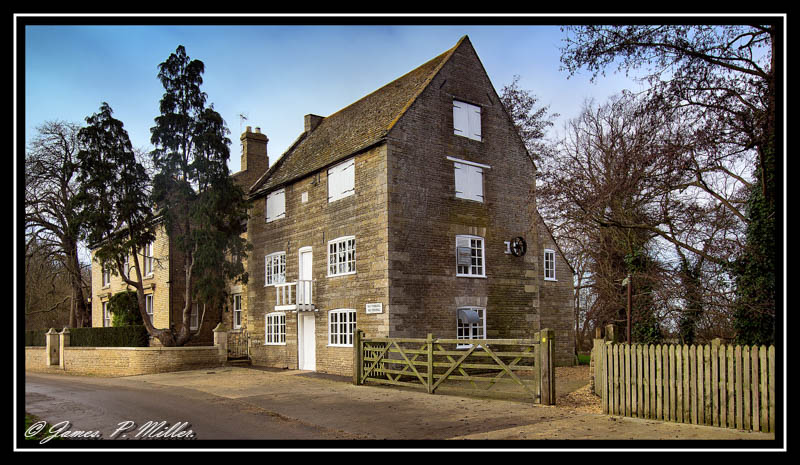
Maxey Mill Cambridgeshire

John Clare the Northampton Peasant Poet would walk the two miles from Helpston to Maxey at least once a week while he was working for Francis Gergory a bachelor who lived with his Mother, they were the Clare’s next door neighbour running the Blue Bell public house in Helpston.

John writes in, Sketches in The Life of John Clare, “that he would go once every week to Maxey a village 2 miles distant for a bag of flour as it was sold cheaper than at home and as his mistress was an economist she never lost sight of a cheap pennyworths”.

He also maintains in his Autobiographical Fragments that one of his worsts labours was the journey in winter afternoons to fetch flour as he had to pass places on his return when it was often getting dark, where it was said to be haunted by ghosts and hobgoblins.

Cambs


Tydd St Giles Cambridgeshire

SONY DSC

The separate Bell Tower of St Giles originally was part of the main building but it tumbled to the ground in the 18th century.

There has been two reasons given for this catastrophe, the first being that of strong winds combined with poor foundations. The second explanation which has such a gothic charm it makes you wish that it was true.

It is said that the peel and clammer of the bells so irritated Lucifer himself that he toppled the tower to the ground.

All credit must be given to Sir Gilbert Scott who undertook the rebuilding of the tower on it present site in 1880s, for his courage in putting right what Old Nick had destroyed.

Tydd St Giles Village Sign


Marholm Cambridgeshire

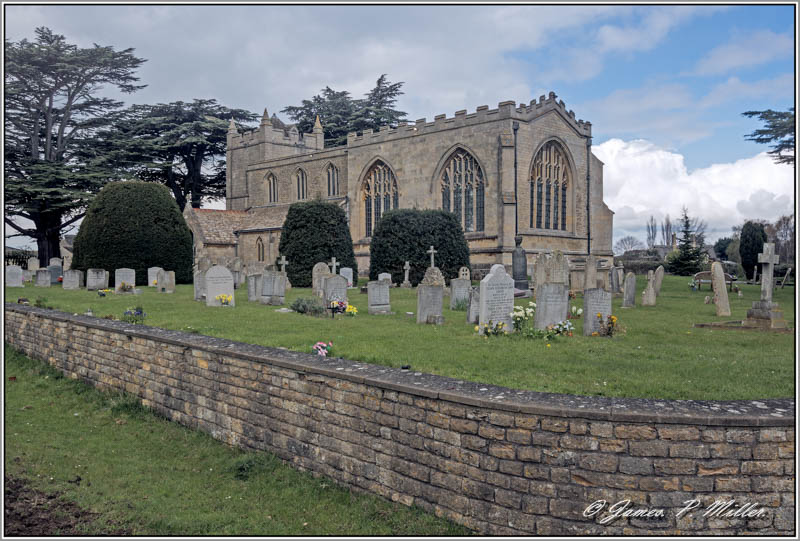
St Marys The Virgin Church Marholm is set on the outskirts of the village on the road to Milton Hall and Castor. It is the last resting place of the Fitzwilliam Family.

St Marys The Virgin Church Marholm

St Marys The Virgin Church Marholm

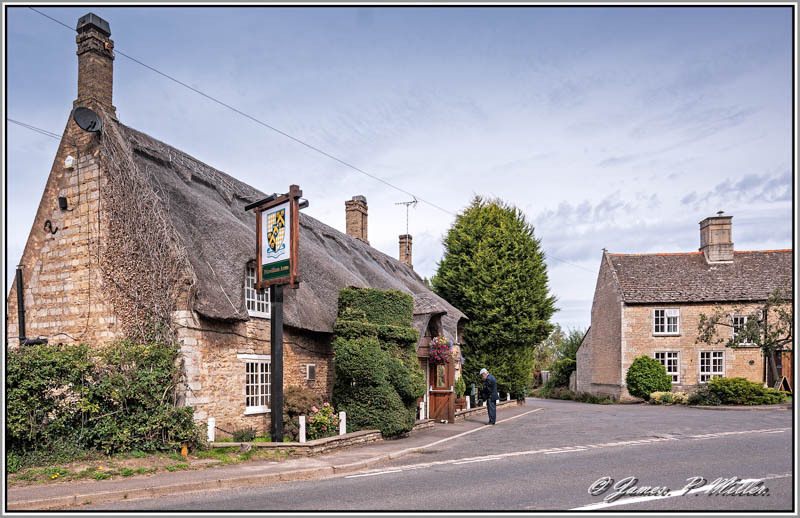
To reach Marholm Church you first have to pass The Fitzwilliam Arms with its welcoming presence, taking the road which leads to Milton Hall the home of the Earls Fitzwilliam.

The Fitzwilliam Arms
Village Sign and 
Just outside the village boundary you will find an entrance into a field where St. Mary’s The Virgin Church sits in all its isolation.

The church is the last resting place of The Fitzwilliam family, the 5th Earl Charles William Wentworth (1868-1857) who was a patron of JOHN CLARE, who’s mother and father were married in this church .

John Clare‛s mother Ann Stimson was Parker Clare’s senior by eight years, Ann was aged 35 when she married Parker, her parents where John (Town Shepherd) and Elizabeth who were from nearby Castor.

Fitzwilliam Resting Place

The headstone with the crest under the tree belongs to William Thomas George Wentworth-Fitzwilliam, the 10th Earl Fitzwilliam (1904—1979) he was last to hold the title.


Dorothy L Sayers Cambridgeshire Connections

Bluntisham

This was the home of Dorothy L Sayers writer and creator of the aristocratic detective Lord Peter Wimsey.

St Marys Church Bluntisham

St Marys Church, Bluntisham, Cambridgeshire

Her father was rector of St Marys Church Bluntisham between 1897 and 1917 before moving to the Parish Church in Christchurch.

He was responsible for the partial restoration and expansion to a ring of eight bells in 1910 which was only completed in 2004 when the bells were rehung in a new iron frame. This made a full circle ringing possible for the first time for 160 years. Perhaps an inspiration for his daughter’s novel The Nine Tailors.
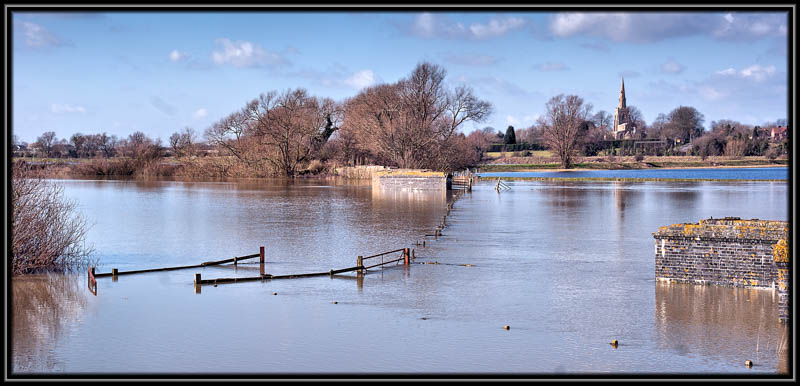
St Mary's Church, Bluntisham, Across The Flooded Great River Ouse.

St Marys Church, Bluntisham, Across The Flooded Great River Ouse. Cambridgeshire

It is said that the names of some of her characters in The Nine Taylors were inspired by the stone masons inscriptions in Bluntisham Churchyard a walk through the long grass failed to discover a H. Gotobed or an Ezra Wilderspin, but when all hope was almost lost we stumbled on a Thoday, a pity that it was not a William or James or even a Mary.

Cambs-Churches

Grave Stone, St Marys Church, Bluntisham, Cambridgeshire

Christchurch

Christchurch Village Sign

Christchurch Village Sign, Cambridgeshire, England
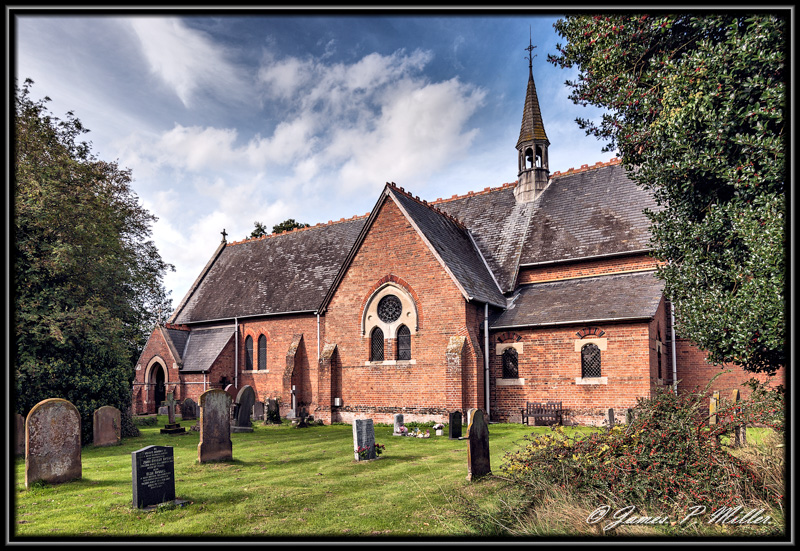
The Christ Church, Christchurch,

The Christ Church, Christchurch, Cambridgeshire, England

Henry and Helen Sayers moved from Bluntisham to Christchurch in 1917 and was rector there until his death in 1928.

Dorothy L Sayers it is said preferred Bluntisham, but was a frequent visitor to her parents home in Christchurch. She is said to have stated; “Christchurch is the last place God made, and when He’d finished he found He’d Forgotten the staircase!”

Henry Sayers photograph can still be seen in the vestry, the commemorative tablet to the couple was placed by parishioners at on the west end of the nave. They are buried in a grave on the north east side of the churchyard which was originally unmarked but their last resting place is now celebrated by a marble stone bearing their names.

March

St Wendra Church is situated on the outskirts of the fenland market town of March. Now surrounded by housing mainly of the modern variety, but this does not detract from the experience of crossing the threshold and encountering the heavenly angles suspended in all their glory.
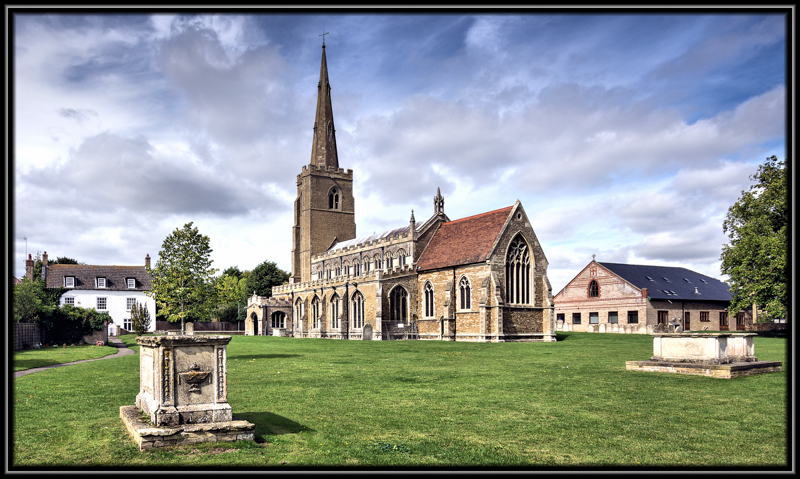
Saint Wendreda's Church, March,

St Wendreda’s Church, March, Cambridgeshire.

They are justifiably world famous and have been admired by many, notably Sir John Betjeman and Dorothy L Sayers .
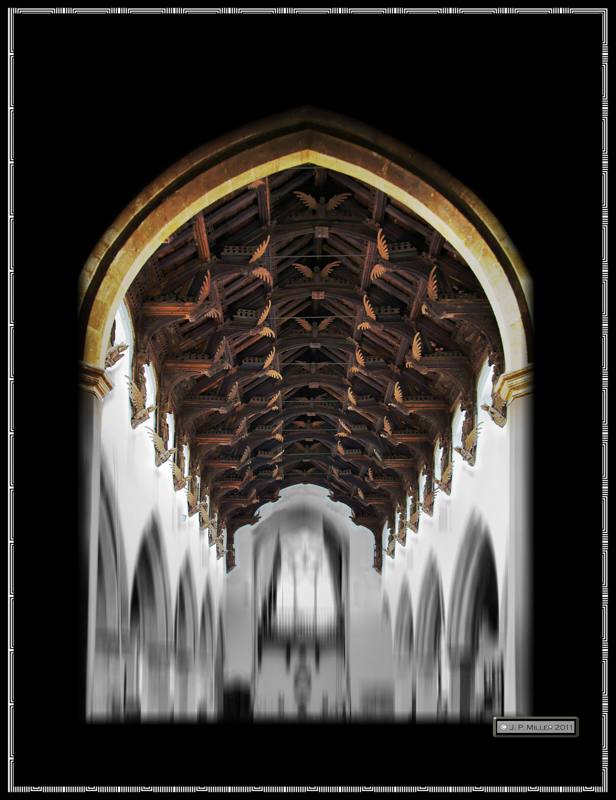
St Wendreda's Church

Angle Roof, St Wendreda’s Church, March, Cambridgeshire

Cambs-Churches

Angle Roof, St Wendreda’s Church, March, Cambridgeshire

Miss Sayers has Mrs Venables the rectors wife in The Lord Peter Wimsey novel The Nine Tailors compare the hummer beamed angle roof in Fenchurch St Pauls with those of Needham Market and March

“of course the angel roof is our great showpiece, I think myself it is lovelier than the ones in March and Needham Market”.

We did try to make our own comparison by visiting the church in Needham Market, Suffolk but found it locked with no indication who held a key, perhaps we may try an other day.?

Cambs-Churches

St Wendreda’s Church, March, Cambridgeshire.


Chapel Bridge Cambridgeshire

Chapel Bridge crosses the Bevill’s Leam which runs from the junction of Whittlesey Dyke and the Twenty-foot River to Mere Mouth where it joins the Old River Nene deep in the Cambridgeshire Fens.

In times gone by barges would make their way along Bevill’s Leam stopping at this point to be loaded with agriculture produce.

At onetime a barge which was converted into a chapel would provided travelling church services.

January 22, 2012_Cambridgeshire-1148_001
Chapel Bridge

Today you are more likely to encounter on the banks of Bevill’s Leam anglers competing in fishing matches.


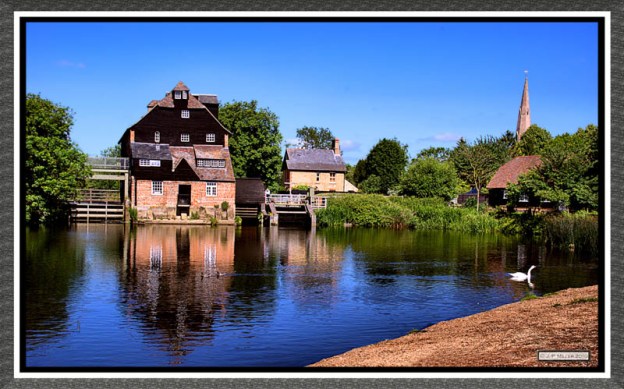
Potto Brown, Houghton Mill and A Friendly Cat, Houghton Cambridgeshire

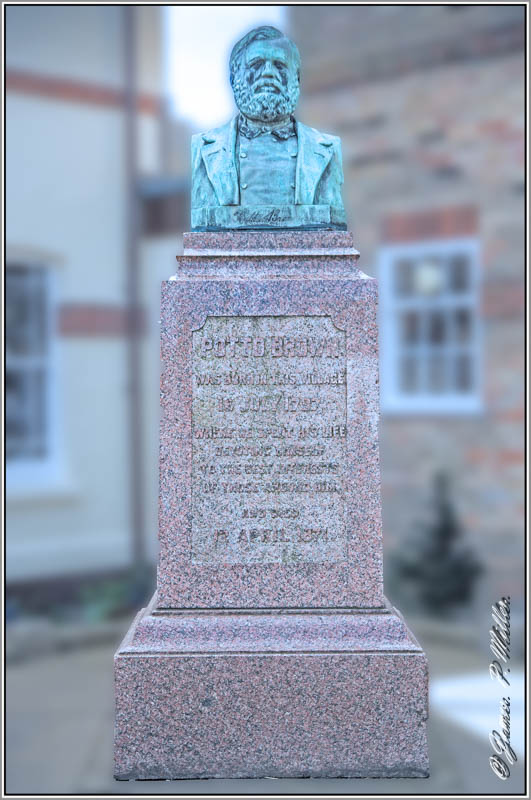
Potto Brown was Born in Houghton Cambridgeshire in 1797 he took over the running of Houghton Mill on his father’s retirement in 1822.

He was responsible for building the mill and contributing to the cost of building the Free Church in nearby St Ives. He build the small chapel in Houghton where his grave can been seen to this day, he died in 1871 and was laid to rest beside his mother and his two previous wives.

Potto Brown

While taking the air‚ as they say in Jane Austen novels, around Houghton Mill on The River Great Ouse, Huntingdonshire,

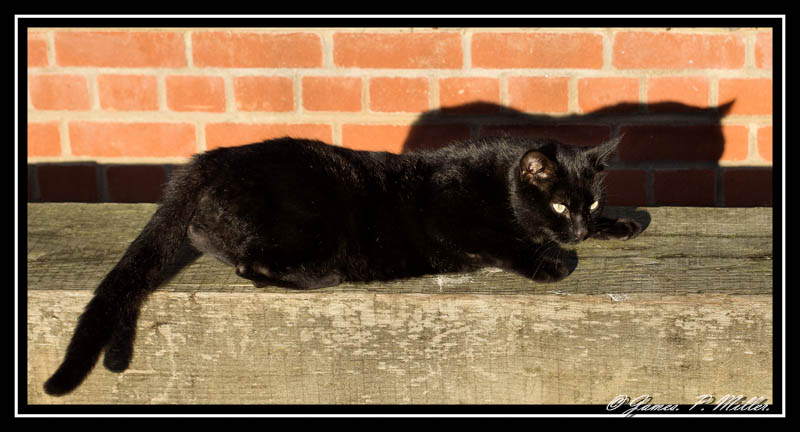
Chasing Shadows

Chasing Shadows

This splendid sleek gentleman made friends with the camera and I on a crisp bright January morning making chasing shadows irresistible.

Village Sign Houghton and Wyton


Bourn Cambridgeshire

Bourn village is situated in the county of Cambridgeshire just to the east of Ermine Street, the Roman Road between London and Lincoln also called the Old North Road.

SONY DSC

Village Sign Bourn

It is home to the world-famous Bourn Hall clinic setup by Patrick Steptoe and Robert Edwards in 1980. Bourn Hall was built-in the early 1600 on the site of a Bourn castle.

The castle was a wooden structure erected in Norman times towards the end of the reign of Norman the Conquer, it was destroyed by fire during the reign of Henry III in the war of the Barons.

The Church of St Mary’s and Helena’s that we see today dates back to the twelfth century but there was a church built just after the Norman Conquest which was made of wood.

Bourn-20110105-Cambridgeshire-001

The Church of St Mary’s and Helena’s

The belfry has a peel of eight bells which have been added to over the years, in the 19th century Bourn was renowned for its good hunting land, the bells of the church would be rung to advise to meet at one of the inns for the hunt. In 1842 the parish could boost a total of five inns.