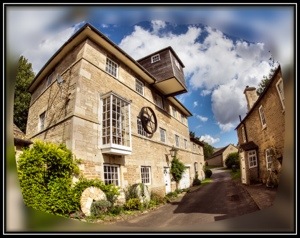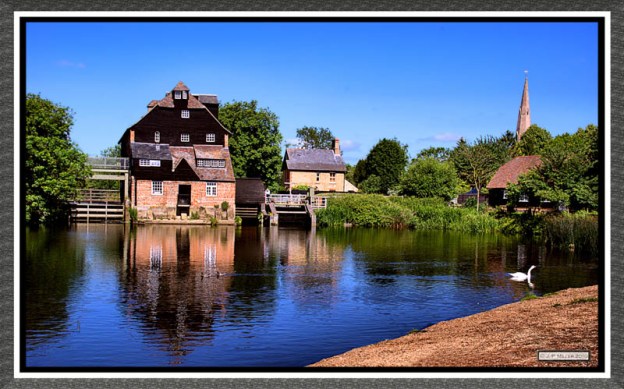
Potto Brown, Houghton Mill and A Friendly Cat, Houghton Cambridgeshire

Potto Brown was Born in Houghton Cambridgeshire in 1797 he took over the running of Houghton Mill on his father’s retirement in 1822.

He was responsible for building the mill and contributing to the cost of building the Free Church in nearby St Ives. He build the small chapel in Houghton where his grave can been seen to this day, he died in 1871 and was laid to rest beside his mother and his two previous wives.
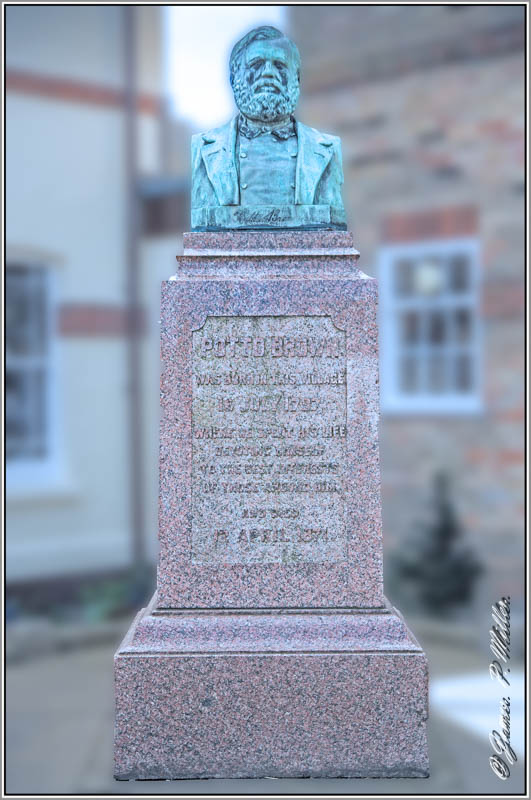
Potto Brown

While taking the air‚ as they say in Jane Austen novels, around Houghton Mill on The River Great Ouse, Huntingdonshire,
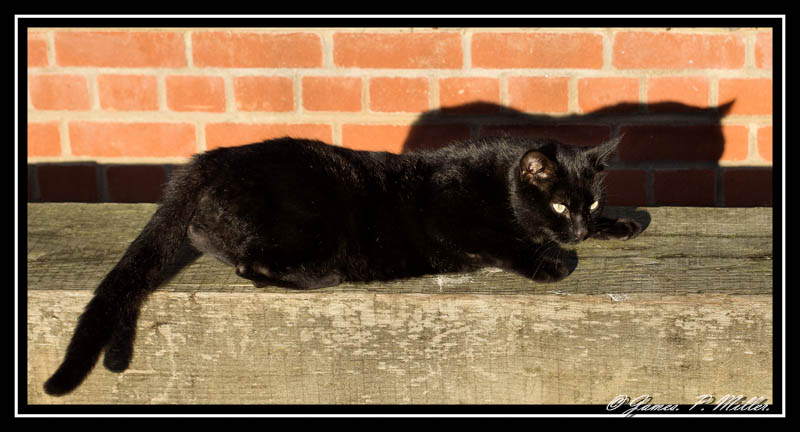
Chasing Shadows

Chasing Shadows

This splendid sleek gentleman made friends with the camera and I on a crisp bright January morning making chasing shadows irresistible.

Village Sign Houghton and Wyton


Bourn Cambridgeshire

Bourn village is situated in the county of Cambridgeshire just to the east of Ermine Street, the Roman Road between London and Lincoln also called the Old North Road.

SONY DSC

Village Sign Bourn

It is home to the world-famous Bourn Hall clinic setup by Patrick Steptoe and Robert Edwards in 1980. Bourn Hall was built-in the early 1600 on the site of a Bourn castle.

The castle was a wooden structure erected in Norman times towards the end of the reign of Norman the Conquer, it was destroyed by fire during the reign of Henry III in the war of the Barons.

The Church of St Mary’s and Helena’s that we see today dates back to the twelfth century but there was a church built just after the Norman Conquest which was made of wood.

Bourn-20110105-Cambridgeshire-001

The Church of St Mary’s and Helena’s

The belfry has a peel of eight bells which have been added to over the years, in the 19th century Bourn was renowned for its good hunting land, the bells of the church would be rung to advise to meet at one of the inns for the hunt. In 1842 the parish could boost a total of five inns.


Soutra Aisle

Soutra Aisle is situated halfway between Edinburgh and the Abbeys of the Scottish Borders, it is all that remains of a Hospital, Monastery and Church which was founded in 1164 and was run by Augustinian Monks.

Soutra Aisle, The Borders Scotland

The Hospital was known as the House of the Holy Trinity and is believed to have been the largest hospital in medieval Scotland. The founders intention was that it was a hospital for the poor as well as travellers and pilgrims visiting the shrines of The Scottish Borders.

The remote location reflects medieval society’s suspicion and fear of sickness, but its locality to one of the few major routes in southern Scotland at that time shows that it was an essential institution for the support of the sick.

Soutra Aisle, The Borders Scotland

The church was built at the top of a hill where there were often fierce winds and frequent cold spells.

The winds still below today but these are now harnessed by a 26 turbine wind farm on Dun Law.

Soutra Aisle, The Borders Scotland

__________________________________________________________________________________________________


LAURENCE STERNE Coxwold North Yorkshire

LAURENCE STERNE was born on November the 24th 1713 in Clonmel, County Tipperary, Ireland and died in London on March the 18th 1768, he was 52.

Thirsk Bank

He was the author of The Life and Opinions of Tristram Shandy, Gentleman which is widely considered the first postmodernist novel, well ahead of its times and a true forerunner to his fellow countryman James Joyce. He also was the author of A Sentimental Journey.

Rev Laurence Sterne

He was Vicar of the North Yorkshire village of Coxwold for eight years were he was laid to rest in 1969 when his body was exhumed when his London resting place St George’s, Hanover Square was sold for redevelopment.

“I am persuaded that every time a man smiles – but much more so when he laughs – it adds something to this fragment of life.”
Rev. Laurence Sterne

“But this is neither here nor there why do I mention it? Ask my pen, it governs me, I govern not it.”
Rev. Laurence Sterne

St Michael's Church


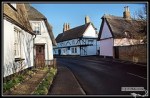
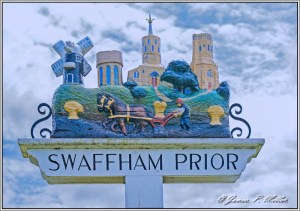
Edwin Muir. Swaffham Prior, Cambridgeshire.

Born in Orkney in 1887.

Socialist, Critic, Contributor to The New Age Magazine, Translator, one of Scotland’s best poets and perhaps a counter balance to Hugh MacDiarmid vision of Scotland and poetic language?

Laid to rest in Swaffham Prior churchyard Cambridgeshire along with his beloved wife Willa Anderson who was an author in her own right.

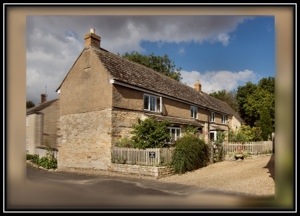
Edwin Muir's Cottage Swaffham Prior

In 1919 he married Willa Anderson and said not long after that “my marriage was the most fortunate event in my life”. They collaborated on English translations of such writers as Franz Kafka, Gerhart Hauptmann, Sholem Asch, Heinrich Mann, and Hermann Broch.

Ewin Muir' Last Resting Place

We were a tribe, a family, a people.

Wallace and Bruce guard now a painted field,

And all may read the folio of our fable,

Peruse the sword, the sceptre and the shield.

A simple sky roofed in that rustic day,

The busy corn-fields and the haunted holms,

The green road winding up the ferny brae.

But Knox and Melville clapped their preaching palms

And bundled all the harvesters away,

Hoodicrow Peden in the blighted corn

Hacked with his rusty beak the starving haulms.

Out of that desolation we were born.

Edwin Muir From Scotland 1941.

SONY DSC


Little Gidding Cambridgeshire


Little Gidding has history running through its environs, it sits nestled down sleepy lanes in Huntingdonshire were an effort has to be made to seek out its secrets.

In 1625 Nicolas Ferrars, his mother and family moved from London to Little Gidding to live a more simpler life setting up a community of religious observance. They set too and restored the manor house and chapel on the site.


Charles I visited Little Gidding a number of times the last was in 2nd May 1646 when he sought refuge from Cromwell’s men after the battle of Naseby.

The Ferrars family lived on at Little Gidding until the mid-eighteen century but the practice of the religious community ended with the death of John, Nicolas Ferrars brother and his wife in 1657.

William Hopkinson a Stamford Solicitor bought the property in 1848 becoming Lord of the manor, he built the house (Ferrars House) which stands today and restored the chapel after years of neglect.

There has been a few prominent poets associated with Little Gidding, George Herbert who was a close friend of Nicolas Ferrars, Richard Crashaw styled “the divine″, was part of the Seventeenth-century Metaphysical School of poets and visited Little Gidding often and one of the greatest twentieth century poets T. S. Eliot who visited on the 25th May 1936 inspiring the final poem in the Four Quartets, Little Gidding.

We shall not cease from exploration

And the end of all our exploring

Will be to arrive where we started

And know the place for the first time.

T S Eliot. Four Quartets

from Little Gidding.


Tickencote Rutland

Just off the busy Great North Road the turning into Tickencote can easily be missed but to say that it is well worth the effort of decreasing the speed and bearing left is under estimating the impression the church of St Peter’s makes on the edge of this little village on the edge of Rutland.

John Clare would walk from Great Castlerton along the river to Tickencore while working as a Lime Burner in the area, he believed he had written some of his best early poetry here and spent a few of his Sundays frequenting The Flower Pot Inn in the village.

Martha (Patty) Turner the future Mrs Clare was born on the 3rd March 1799 in Tickencote, he meet her while on his way to The Flower Pot Inn. The Flower Pot Inn today is a private house and the only evidence of it previous existence is the name on the fence of The Flower Pot Cottage.


Elstow Bedfordshire

I do not know what I expected but it was not what we found. I was disappointed to find that Elstow the birth place of John Bunyan had been swallowed up by a sprawling Bedford and surrounded by its busy road networks and bypass leading you on to the M1 motorway and Milton Keynes.

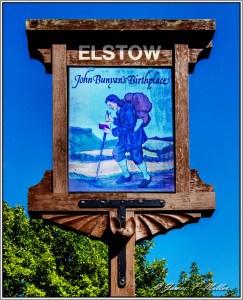
John Buynan Birthplace Elstow Village Sign Bedfordshire

The Abbey Church of St Helena and St Mary is all that is left of a larger monastic church begun in 1078 it is situated just of the Village green where John played in his youth, he was christened here in 1628 and his parents and sister are buried in the graveyard.

As photo opportunities go it was a little disappointing, The Moot House on the village green which houses a museum on 17th century life did have a certain charm but I found it almost to pristine and clinical. The only redeeming feature was the village sign.

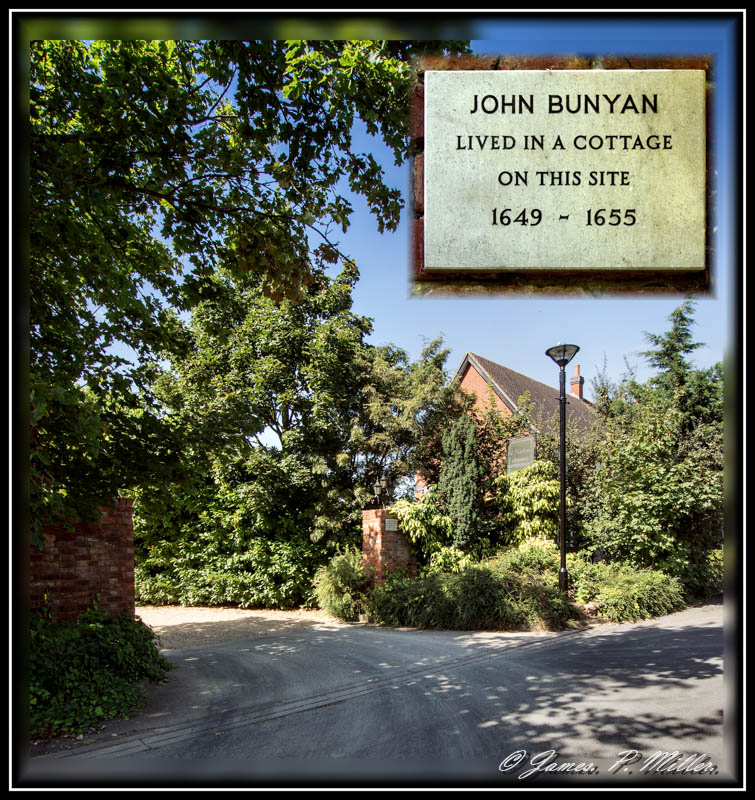
Perhaps this is all a little harsh but it was not helped by the fact that both the village school and the Swan public house had seen better days and we’re boarded up. There was a plaque on the high street marking the spot were John Buynan once lived on his return from the civil war but even this lacked any romance and very little inspiration.

Therefore it has to be concluded that it is the man, his teachings and his writings that are the enduring factor and leave the more lasting impression.

Aldwincle Northamptonshire


John Dryden poet, playwright, critic was born in Aldwincle Northamptonshire in 9 August 1631 and Christened in the Church of All Saints where his grandfather was Rector.

The house in which he was born still stand in the shadow of All Saints Church.

20130807_Northamptonshire-19-330

All Saints Church is now in the care of The Church Conservation Trust as it is no longer needed for regular worship but remains as consecrated buildings and is of historical importance.

SONY DSC

What weight of ancient witness can prevail,

If private reason hold the public scale?

But gracious God, how well does thou provide

For erring judgements an unerring guide!

Thy throne is darkness in the abyss of light,

A blaze of glory that forbids the sight.

O teach me to believe thee thus concealed,

And search no further than thyself revealed;

But her alone for my director take,

Whom thou hast promised never to forsake!

John Dryden From Confessio Fidei


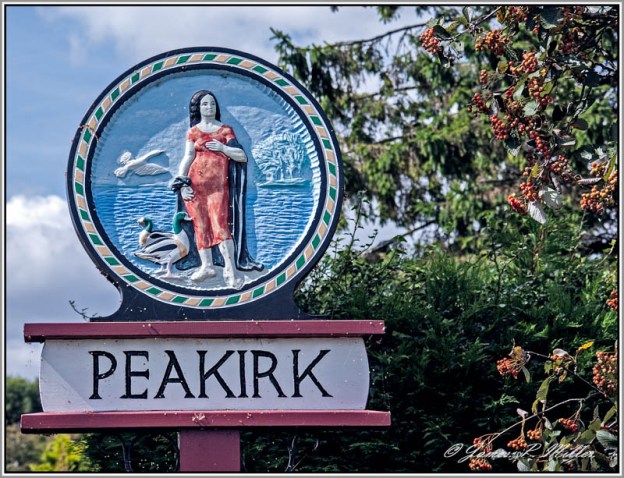
Peakirk

Peakirk is a small village near Peterborough to the south and Stamford to the west, its name means Pega’s Church.

Cambs-Churches

In the Eighth century St Pega had a hermitage here, she was the sister of St Guthlac who resided on the island of Clowland some 5 miles away. It is said that she lived in Clowland before being banished by him because he maintained that her form had been taken by the devil tempting him to break his vows and eat before the sun went down.

When her brother died in 714AD she attended his funeral traveling along the river Weland where tradition has it that she healed a blind man from the town of Wisbech on her way to Crowland.

February 23, 2013_Cambridgeshire-1822_001

A year later Pega set out on a Pilgrimage to Rome she never returned to Peakirk, she did in 719 and her mortal remains rest in a unknown church in the eternal city but legend has it that her heart was returned to the Peakrirk to be Interned in a shrine.